Home / Research / Wegovy heart-risk teardown
Study teardown · Sources checked October 16, 2026
Does Wegovy (semaglutide) protect your heart if you don’t have diabetes? If you already have heart disease, yes: fewer heart attacks, strokes and cardiovascular deaths, with important caveats.
In the SELECT trial, Novo Nordisk’s 17,604-person heart study, once-weekly semaglutide 2.4 mg (Wegovy) cut the risk of a first major cardiovascular event — cardiovascular death, nonfatal heart attack, or nonfatal stroke — by about 20% versus placebo in people with overweight or obesity and established heart disease but no diabetes (hazard ratio 0.80).[1] Absolute rates were 6.5% on drug versus 8.0% on placebo over a mean follow-up of about 40 months. That is a real benefit in a carefully selected secondary-prevention population, not a blanket promise for every person with excess weight.
SELECT is the outcomes trial behind Wegovy’s FDA indication to reduce major adverse cardiovascular events in adults with established cardiovascular disease and obesity or overweight.[3] This page walks through what was tested, who enrolled, the primary and secondary results in absolute terms, what the trial got right, and what headlines usually skip: funding, the placebo-plus-standard-care comparator, discontinuation, absolute versus relative risk, and generalizability.
Why we say that
The primary endpoint was adjudicated MACE in an intention-to-treat analysis of 17,604 people. The hazard ratio of 0.80 (95% CI 0.72 to 0.90; P<0.001) cleared the pre-planned superiority bar after adjustment for an interim look.[1] Over mean follow-up of 39.8 months, that translated to 569 of 8,803 people (6.5%) on semaglutide versus 701 of 8,801 (8.0%) on placebo — an absolute difference of 1.5 percentage points. As our arithmetic from those published rates (not a number reported as NNT in the paper), about 67 people would need to be treated for a similar duration to prevent one first MACE event.
Caveats sit next to that strength. Cardiovascular death alone did not meet the hierarchical testing threshold (HR 0.85; P=0.07), so later confirmatory secondaries were not formally declared superior.[1] Everyone already had prior myocardial infarction, stroke, or symptomatic peripheral arterial disease — this is secondary prevention, not primary prevention in “healthy overweight.” Novo Nordisk funded the trial and designed the protocol with the academic steering committee. More people stopped the drug for adverse events than stopped placebo (16.6% vs 8.2%), mostly gastrointestinal.[1]
What was tested
SELECT was a multicenter, double-blind, randomized, placebo-controlled, event-driven superiority trial at 804 sites in 41 countries. From October 2018 through March 2021, 17,604 adults were assigned 1:1 to once-weekly subcutaneous semaglutide 2.4 mg (8,803) or matching placebo (8,801). Dose escalation ran over 16 weeks; lower maintenance doses were allowed if 2.4 mg was not tolerated. Mean exposure was 34.2 months; mean follow-up was 39.8 months.[1] The trial was registered on ClinicalTrials.gov (NCT03574597) before enrollment began.[2]
Both arms stayed on standard cardiovascular care. Investigators were encouraged to follow evidence-based recommendations for managing underlying cardiovascular disease. The label and paper describe individualized healthy lifestyle counseling (diet and physical activity) plus adjustment of concomitant cardiovascular therapies as needed.[1][3] If diabetes developed during the trial, participants continued assigned product; open-label GLP-1 receptor agonists were prohibited.
Who could join: age 45 or older; BMI of 27 or greater; established cardiovascular disease defined as prior myocardial infarction, prior stroke, or symptomatic peripheral arterial disease. Key exclusions included any history of diabetes or HbA1c of 6.5% or higher at screening, glucose-lowering drugs or a GLP-1 receptor agonist within 90 days, NYHA class IV heart failure, and end-stage kidney disease or dialysis.[1][2]
Endpoints: the primary endpoint was time to first MACE (cardiovascular death, nonfatal myocardial infarction, or nonfatal stroke). Confirmatory secondary endpoints, tested only if the primary succeeded and in hierarchical order, were cardiovascular death, a heart-failure composite (cardiovascular death or hospitalization or urgent visit for heart failure), and death from any cause. Supportive secondaries included expanded MACE composites, individual components, weight, waist, blood pressure, lipids, hsCRP, and glycemic transitions.[1]
Analysis: efficacy used the intention-to-treat population (everyone randomized). Cause-specific hazard ratios came from Cox models. Continuous supportive endpoints at week 104 used ANCOVA with multiple imputation under a missing-at-random assumption and were not multiplicity-adjusted.[1]
Who was enrolled
| Characteristic | Semaglutide (n=8,803) | Placebo (n=8,801) |
|---|---|---|
| Mean age | 61.6 years | 61.6 years |
| Male | 72.2% | 72.5% |
| White / Asian / Black | 83.9% / 8.2% / 4.0% | 84.1% / 8.3% / 3.7% |
| Hispanic or Latino | 10.4% | 10.3% |
| Mean body weight | 96.5 kg | 96.8 kg |
| Mean BMI | 33.3 | 33.4 |
| Mean HbA1c | 5.78% | 5.78% |
| HbA1c ≥5.7% (prediabetes range) | 66.8% | 66.1% |
| Prior MI only / stroke only / PAD only | 67.7% / 17.9% / 4.3% | 67.5% / 17.7% / 4.6% |
| Lipid-lowering / platelet inhibitors / beta-blockers | Pooled: 90.1% / 86.2% / 70.2% | |
About three-quarters had a prior myocardial infarction; nearly a quarter had chronic heart failure. This is a high-risk secondary-prevention cohort already on guideline therapies, not people whose only risk factor is excess weight.[1]
Headline results
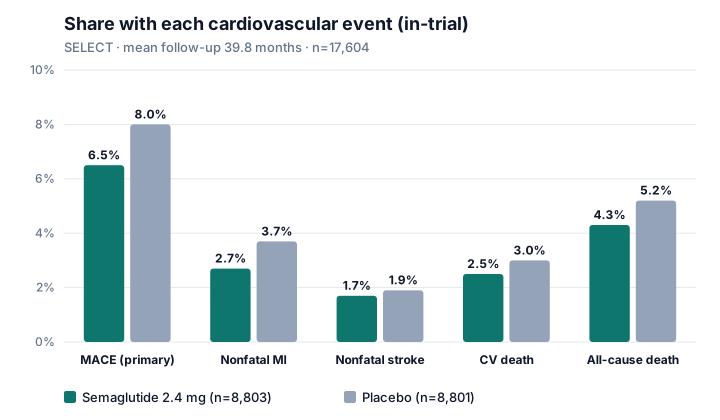
| End point | Semaglutide | Placebo | Hazard ratio (95% CI) |
|---|---|---|---|
| Primary MACE | 569 (6.5%) | 701 (8.0%) | 0.80 (0.72–0.90); P<0.001 |
| CV death (confirmatory #1) | 223 (2.5%) | 262 (3.0%) | 0.85 (0.71–1.01); P=0.07 |
| HF composite | 300 (3.4%) | 361 (4.1%) | 0.82 (0.71–0.96); not formally tested |
| Death from any cause | 375 (4.3%) | 458 (5.2%) | 0.81 (0.71–0.93); not formally tested |
| Nonfatal MI | 234 (2.7%) | 322 (3.7%) | 0.72 (0.61–0.85); supportive |
| Nonfatal stroke | 154 (1.7%) | 165 (1.9%) | 0.93 (0.74–1.15); supportive |
| Coronary revascularization | 473 (5.4%) | 608 (6.9%) | 0.77 (0.68–0.87); supportive |
| Expanded CV composite | 873 (9.9%) | 1,074 (12.2%) | 0.80 (0.73–0.87); supportive |
The absolute risk difference for primary MACE is 1.5 percentage points (8.0% minus 6.5%). Our NNT estimate of about 67 over a similar mean follow-up is simple arithmetic from those crude rates; the paper itself reports the hazard ratio and percentages, not an NNT.[1] Directionally, nonfatal MI contributed more to the composite than nonfatal stroke. Because cardiovascular death did not meet the hierarchical bar, the favorable-looking hazard ratios for the heart-failure composite and all-cause death are point estimates with confidence intervals that should not be read as confirmed superiority.
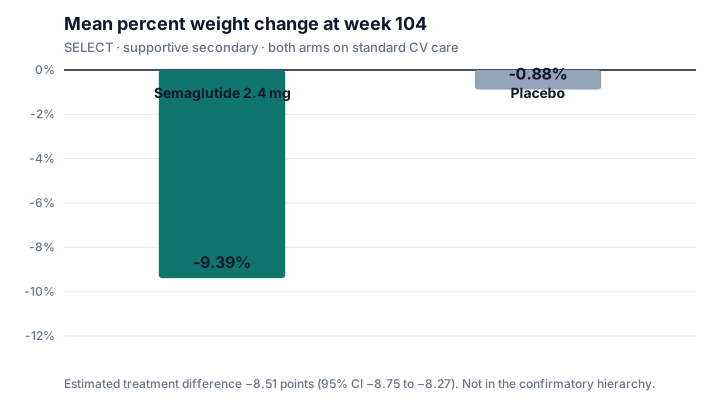
Other supportive changes at week 104 included waist circumference (−7.56 vs −1.03 cm), systolic blood pressure (−3.82 vs −0.51 mm Hg), heart rate (+3.79 vs +0.69 beats/min), and high-sensitivity CRP (relative change −39.12% vs −2.08%). New HbA1c ≥6.5% occurred in 3.5% vs 12.0% (HR 0.27).[1] These are mechanistic and metabolic signals alongside the hard MACE result; confidence intervals for supportive endpoints were not adjusted for multiplicity.
Side effects and safety
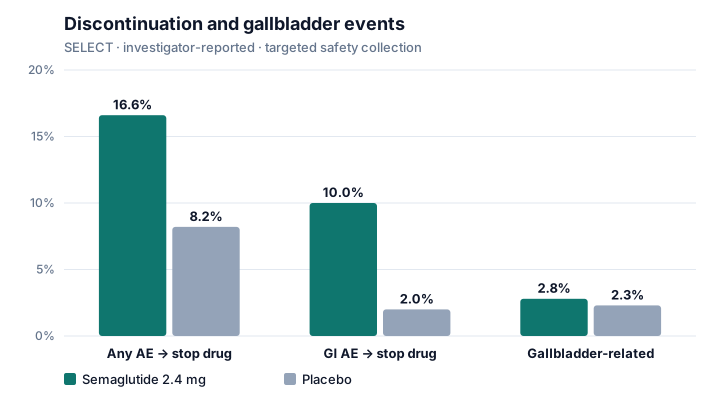
| Event | Semaglutide (n=8,803) | Placebo (n=8,801) |
|---|---|---|
| Serious adverse events | 33.4% | 36.4% |
| Stopped drug/placebo because of an adverse event | 16.6% | 8.2% |
| …of which gastrointestinal | 10.0% | 2.0% |
| Gallbladder-related disorders | 2.8% | 2.3% |
| Malignant neoplasms | 4.8% | 4.7% |
| Acute pancreatitis (adjudicated) | 0.2% (17 people) | 0.3% (24 people) |
| Acute kidney failure | 1.9% | 2.3% |
Discontinuation was common and mostly gastrointestinal. Adverse events led to permanent product discontinuation in 16.6% on semaglutide versus 8.2% on placebo. Gastrointestinal disorders drove most of the gap (10.0% vs 2.0%). Permanent premature discontinuation of product for any reason was 26.7% vs 23.6%; patients still received assigned product for 82.5% and 87.7% of potential treatment time, respectively.[1] SELECT used targeted safety collection (serious events, discontinuations, and prespecified special-interest events), so it does not publish the full STEP-1-style nausea/diarrhea incidence tables for every mild GI symptom.
Serious adverse events were not higher on drug. They were lower on semaglutide (33.4% vs 36.4%), with fewer cardiac serious events (11.5% vs 13.5%). Malignant neoplasms were essentially equal (4.8% vs 4.7%). Adjudicated acute pancreatitis was uncommon and not more frequent on semaglutide.[1]
Gallbladder. Gallbladder-related disorders occurred in 2.8% vs 2.3% (P=0.04). That absolute gap is smaller than in shorter obesity trials, but it is still an excess on drug. The FDA Wegovy label warns that acute gallbladder disease was more frequent on Wegovy than placebo even after accounting for the degree of weight loss.[3]
Lean mass. SELECT did not report DXA body-composition results in the main paper we opened. We do not invent figures. STEP 1’s small DXA subgroup is discussed in our Wegovy weight-loss (STEP 1) teardown.
What the FDA label warns about. The current Wegovy prescribing information (revised August 2025) carries a boxed warning for thyroid C-cell tumors seen in rodents; human relevance is unknown, and the drug is contraindicated with personal or family history of medullary thyroid carcinoma or MEN 2. Other warnings and precautions include acute pancreatitis, acute gallbladder disease, hypoglycemia when combined with insulin or insulin secretagogues, acute kidney injury from volume depletion, severe gastrointestinal adverse reactions, hypersensitivity, diabetic retinopathy complications in people with type 2 diabetes, heart-rate increase, suicidal behavior and ideation, and pulmonary aspiration during general anesthesia or deep sedation.[3]
What it got right
A hard outcomes win where prior obesity drugs failed. Earlier lifestyle and pharmacologic obesity interventions had not shown fewer heart attacks, strokes, or cardiovascular deaths in dedicated outcomes trials. SELECT delivered a statistically significant 20% relative reduction in adjudicated 3-point MACE in people without diabetes.[1] The effect size is in the same ballpark as GLP-1 receptor agonist cardiovascular benefits reported in type 2 diabetes meta-analyses (the paper cites a meta-analytic HR around 0.86), within the limits of between-trial comparison.[1]
Size, duration, and rigor. The trial randomized 17,604 people across 41 countries, was event-driven to at least 1,225 primary events, double-blind (including outcomes assessors), and analyzed as randomized. Mean follow-up approached 40 months. An events adjudication committee confirmed endpoints. Completion was high: 96.9% completed the trial, and vital status was known for 99.4%.[1]
Background therapy was already strong. About 90% were on lipid-lowering therapy and 86% on platelet inhibitors at baseline. The MACE reduction appeared on top of that care, not instead of it.[1][3]
What a critical reader should notice
1. Funding and analysis roles
Novo Nordisk funded SELECT. The protocol was designed by the sponsor and the academic steering committee. Several named authors are Novo Nordisk employees. That does not erase the registered design, blinding, adjudication, or the clear primary result, but it means independent replication outside this sponsor’s program is still missing for the non-diabetes obesity population.[1]
2. The comparator was placebo plus standard care, not another obesity drug
SELECT answers whether adding semaglutide 2.4 mg to guideline cardiovascular care beats adding placebo. It does not tell you how Wegovy compares with tirzepatide, bariatric surgery, or intensive lifestyle programs alone for hard outcomes. Both arms could have concomitant therapy adjusted; SGLT2 inhibitors were started more often in the placebo arm during the trial (332 vs 213 people).[1]
3. Dropout and missing data
Permanent premature discontinuation of product was 26.7% on semaglutide and 23.6% on placebo — higher than in shorter STEP obesity trials — and adverse-event discontinuations were roughly doubled on drug. Efficacy still used the in-trial ITT observation period with censoring at withdrawal, non-endpoint death, or last contact. Continuous week-104 endpoints used multiple imputation. High vital-status completeness (99.4%) is a genuine strength for the mortality and MACE analyses; it does not erase the tolerability gap.[1]
4. Absolute versus relative risk
A 20% relative risk reduction sounds large. The absolute difference was 1.5 events per 100 people over mean follow-up of about 40 months (8.0% vs 6.5%). Framing both ways matters. The same habit applies to safety: gastrointestinal discontinuation was five times as common on drug in relative terms (10.0% vs 2.0%) and eight extra people per 100 in absolute terms (our arithmetic from Table 4).[1]
5. Secondary prevention, not primary
Every participant needed prior MI, stroke, or symptomatic PAD. The authors list this as an important limitation: effects on primary prevention in people with overweight or obesity but without prior atherosclerotic disease were not studied.[1] The enrolled population was also mostly male (72%) and White (84%), with only about 4% identifying as Black overall (12.5% among US enrollees). Results should not be casually generalized to young adults, primary-prevention patients, or groups poorly represented in the trial.
6. Hierarchy stopped at cardiovascular death
After the primary win, confirmatory testing required cardiovascular death to clear a stricter nominal bar. It did not (P=0.07). Heart-failure composite and all-cause death therefore remain supportive/descriptive under the pre-specified gatekeeping plan, even though their point estimates favored semaglutide.[1] Headlines that treat all-cause mortality as a confirmed SELECT win overstate the hierarchical claim.
7. Weight loss was real but smaller than STEP 1
Mean weight change at week 104 was −9.39% vs −0.88%. That is substantial, and smaller than STEP 1’s −14.9% at week 68 in a younger, more female, diabetes-free obesity cohort without required prior CVD.[1][4] SELECT was not a weight-loss registration trial; weight was supportive. Mechanisms of MACE reduction may include weight-related and weight-independent pathways — the paper discusses both and notes the early separation of event curves.[1]
Regulatory status
Based on SELECT (labeled Study 1, NCT03574597), Wegovy is FDA-indicated, with a reduced-calorie diet and increased physical activity, to reduce the risk of major adverse cardiovascular events (cardiovascular death, nonfatal myocardial infarction, or nonfatal stroke) in adults with established cardiovascular disease and either obesity or overweight.[3] It retains separate indications for chronic weight management and, under accelerated approval, noncirrhotic MASH with moderate to advanced fibrosis. The boxed warning for thyroid C-cell tumors and the Warnings and Precautions listed above remain part of the current label (revised August 2025).[3] This page is educational only and does not recommend starting, stopping, or changing any medication.
What SELECT robustly shows
In adults 45 and older with prior atherosclerotic cardiovascular disease, BMI ≥27, and no diabetes, weekly semaglutide 2.4 mg reduced the hazard of first 3-point MACE by about 20% versus placebo on a background of standard care, with absolute rates of 6.5% versus 8.0% over roughly 40 months of follow-up.[1] The trial was large, long, adjudicated, and completed with near-complete vital status. It does not prove primary prevention, does not confirm superiority on cardiovascular death alone under its hierarchy, and carries a meaningful gastrointestinal discontinuation burden. For weight-loss magnitude and regain after stopping in a different population, see the Wegovy weight-loss (STEP 1) teardown.
References
- Lincoff AM, Brown-Frandsen K, Colhoun HM, et al.; SELECT Trial Investigators. Semaglutide and Cardiovascular Outcomes in Obesity without Diabetes. N Engl J Med. 2023;389(24):2221-2232. doi:10.1056/NEJMoa2307563. PMID 37952131. Full text (Tables 1–4, Methods, Discussion, Notes): https://www.nejm.org/doi/full/10.1056/NEJMoa2307563; PubMed: https://pubmed.ncbi.nlm.nih.gov/37952131/. Checked October 16, 2026.
- ClinicalTrials.gov. NCT03574597: SELECT - Semaglutide Effects on Cardiovascular Outcomes in People With Overweight or Obesity. Record including eligibility criteria, design, and enrollment. https://clinicaltrials.gov/study/NCT03574597. Checked October 16, 2026 (via ClinicalTrials.gov API v2).
- U.S. Food and Drug Administration. WEGOVY (semaglutide) injection prescribing information, revised 08/2025 (Boxed Warning; Indications and Usage; sections 5.1–5.11; Clinical Studies 14.1 Study 1 / NCT03574597). https://www.accessdata.fda.gov/drugsatfda_docs/label/2025/215256s024lbl.pdf. Checked October 16, 2026.
- Wilding JPH, Batterham RL, Calanna S, et al.; STEP 1 Study Group. Once-Weekly Semaglutide in Adults with Overweight or Obesity. N Engl J Med. 2021;384(11):989-1002. PMID 33567185. https://www.nejm.org/doi/full/10.1056/NEJMoa2032183. Checked October 16, 2026. (Cross-link for STEP 1 weight-loss magnitude; see also our STEP 1 teardown.)
This page analyzes published research and the current product label. It is not medical advice and does not recommend starting, stopping, or changing any medication. Charts were rebuilt by Jabbit from the published numbers cited in each caption.