Home / Research / MOTS-c teardown
Paper-trail teardown · FDA review, patents, SEC filings, trial registries and original papers read · Sources checked October 16, 2026
Does MOTS-c work like exercise in a shot? In mice, partly. In people, nobody has shown it.
In mice, MOTS-c injections stopped weight gain on a fattening diet and helped old animals run longer, at doses far above what people post about using.[2][3] In people, nobody has published a study that gives it. We sorted all 264 PubMed records that mention it and found none that did.[20] FDA found no human exposure data “via any route of administration.”[1] The only company that took a MOTS-c-based drug into people shelved it over its formulation and then wound itself down.[5][18]
Why this matters this week
On October 14, 2026 FDA sent an “Interim Access Policy for Compounding Using Certain Peptides” to the White House for review. Its text isn’t public.[24] MOTS-c is one of six peptides FDA’s compounding advisory committee backed in July, by 7 votes to 5 with 2 abstaining, after FDA’s own reviewers recommended against it.[25][1] On X, a post about the filing on October 15 named MOTS-c as one of the three “everyone’s watching.”[26] Four days earlier, a peptide account posted “BREAKING: Peptide MOTS-C found to have protective qualities over human retinal cells.” It linked no study and had been viewed more than 77,000 times when we checked.[26] We counted 622 posts mentioning MOTS-c from October 10 to 16, and people are swapping doses in them: “1,5mg MOTS-c on training days,” “i am starting off at 500mcg daily.”[26] So we went back to where MOTS-c came from and what has actually been tested.
Why we say that
MOTS-c is real, and your body makes it. It is a 16-amino-acid peptide encoded inside a gene in your mitochondria, the 12S rRNA gene, rather than in the DNA of the cell nucleus.[2] Changhan Lee and colleagues in Pinchas Cohen’s lab described it in Cell Metabolism in March 2015. They reported that it acts mainly in muscle: it slows a metabolic loop called the folate cycle. That lets a compound called AICAR build up, which switches on AMPK, the cell’s fuel sensor that exercise also turns on.[2] That’s where “exercise in a vial” comes from.
The patent came before the paper. The university had filed a patent in March 2013 on what it then called “MOTS3,” and licensed it exclusively to CohBar, a company Cohen founded, in August 2013, a year and a half before the paper appeared.[4] CohBar’s own annual report says MOTS-c “was discovered in 2012.”[5] Two US patents followed. One, granted in 2018, claims treating obesity or fatty liver with MOTS-c, and the other, granted in 2019, claims treating diabetes. Google Patents lists both as active until 2034.[4] Patents don’t need human data, and none existed. The 2015 paper and the 2021 exercise paper both disclose that some authors held CohBar stock or consulted for it.[2][3] That doesn’t make the mouse results wrong. It does mean the field’s founding papers came from people with a commercial stake.
What the mice showed, and at what dose
In the 2015 paper, male mice on a 60% fat diet got 0.5 mg/kg of MOTS-c injected into the abdomen every day for eight weeks. They didn’t become obese, though they ate the same amount as untreated mice. On a normal diet it made no difference to weight.[2] A separate test of insulin sensitivity used ten times that dose, 5 mg/kg a day for a week.[2]
The exercise claims come from a 2021 Nature Communications paper by Lee’s group and collaborators. In ten sedentary young men, muscle MOTS-c rose 11.9-fold after a cycling session and blood levels rose about 1.5-fold, back to baseline after four hours.[3] Then the researchers went back to mice. In young mice on a normal diet, 15 mg/kg improved treadmill running, while 5 mg/kg didn’t differ from untreated mice. In old mice, 15 mg/kg a day for two weeks improved running. In very old mice, 15 mg/kg three times a week, started at 23.5 months, improved grip strength, stride and walking.[3]
That paper is also the source of the “MOTS-c extends lifespan” line. What it actually reports is a “trend towards increased median (6.4%) and maximum (7.0%) lifespan” in 18 treated mice versus 19 controls. The difference was significant only up to 31.8 months of age, with an overall P value of 0.23. The authors wrote that “larger cohorts will be needed.”[3] FDA’s briefing document described the same experiment as having “increased not only their physical capacity but also their lifespan.”[1] The paper doesn’t support that wording.
What we found when we did the math on doses
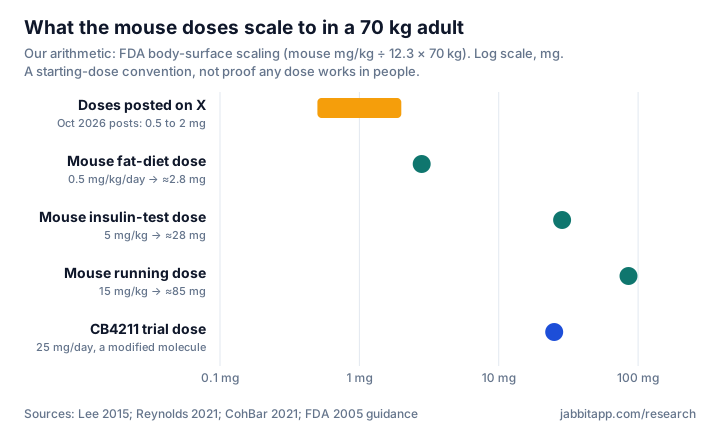
FDA’s standard method for converting an animal dose to a human starting dose divides a mouse’s mg/kg dose by 12.3.[21] We applied it. The 0.5 mg/kg fat-diet dose works out to about 2.8 mg for a 70 kg adult. The 5 mg/kg insulin-test dose is about 28 mg. The 15 mg/kg dose that made mice run better, and that was used in the lifespan experiment, is about 85 mg per injection.[2][3][21] The doses people post on X are 0.5 to 2 mg.[26] That’s roughly 1/40th to 1/170th of the running dose. The products nominated to FDA were 5 mg and 10 mg vials, so the mouse running dose would take about eight and a half 10 mg vials per shot.[1]
This is our arithmetic, and it has limits. Body-surface scaling is a convention for choosing a safe first dose in a trial, not proof that a dose works. The mice got injections into the abdominal cavity, while people inject under the skin. There is no human pharmacokinetic study to say what either route delivers.[21][1] The point is narrower: the doses people use have never been tested in anything, and the mouse results came from much higher doses.
What’s known in people: only the body’s own MOTS-c
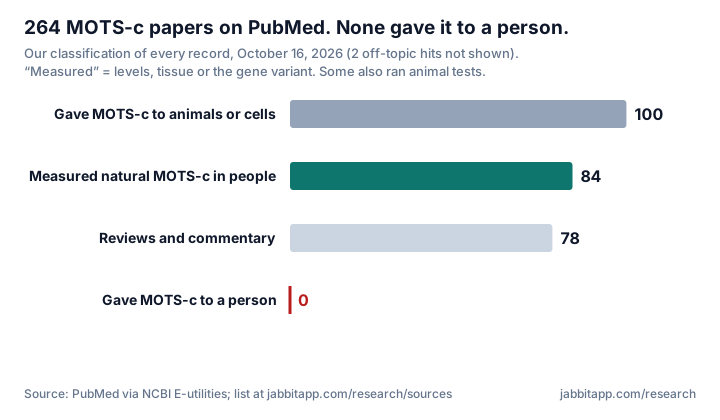
We pulled every PubMed record that mentions MOTS-c in its title or abstract, 264 as of October 16, 2026, and sorted each one. A hundred gave MOTS-c to animals or cells. Eighty-four measured the body’s own MOTS-c in people, in blood or muscle, or looked at a gene variant. Seventy-eight were reviews or commentary. None reported giving MOTS-c to a person. The six that call themselves trials or controlled studies all measured natural MOTS-c, in settings from exercise and heat stress to cancer treatment, heart disease and heart surgery.[20] Our list and method are public, so you can check them.[20]
The studies of natural levels don’t agree with each other. In a study of 225 people, MOTS-c was lower in type 2 diabetes.[11] In Chinese children it was lower in obese boys.[10] In a 2026 study of adults heading for weight-loss surgery it was higher in obesity, and it didn’t change after they lost weight.[12] Another study found higher levels went with more belly and liver fat.[13] Professional athletes had lower levels than sedentary people.[14] Older men had about 1.5 times more MOTS-c in muscle than young men, even as their blood levels were lower.[30]
Part of the reason may be the measurement itself. The “normal” levels reported in these papers differ more than 2,000-fold: about 0.22 ng/mL in one, 0.5 ng/mL in another, 562 ng/mL in a third.[12][9][10] That isn’t biology. It’s different test kits. In 2019 the German anti-doping lab in Cologne built a mass-spectrometry test for MOTS-c and could not confirm the levels a commercial antibody kit reported, 45.9 to 218.5 ng/mL in 20 healthy people.[8] If the common kits don’t reliably measure MOTS-c, studies that link “low MOTS-c” to a disease are on shaky ground.
The gene variant that went from longevity to diabetes
The best evidence that natural MOTS-c matters in people is genetic. A mitochondrial variant called m.1382A>C swaps one amino acid in MOTS-c (K14Q). It is specific to Asian populations; in the Japanese controls of one study about 7.5% carried it.[7] In 2015 Noriyuki Fuku and colleagues in Japan suggested it “may be among the putative biological mechanisms explaining the high longevity of Japanese people.”[6] In 2021 Fuku’s team, now working with Cohen and Lee’s group, tested it. Across three cohorts totaling 27,527 people, men carrying the variant had more type 2 diabetes, especially the least active men; women didn’t. Mice given the altered peptide didn’t get the metabolic benefit. And among 736 centenarians the variant was no more common than in controls, 7.7% versus 7.5%. They concluded it is “unlikely to be involved with exceptional longevity.”[7] So the human genetics support a role for MOTS-c in blood sugar, and they argue against the longevity story it was first used for.
The one drug that reached people wasn’t MOTS-c
CohBar never tested MOTS-c itself in people. It tested CB4211, which it calls “a novel and improved analog of MOTS-c,” a modified molecule.[5] The trial began in healthy volunteers and was “suspended in November 2018 in order to address injection site reactions”; the company changed the formulation partway through.[5] In the end 65 healthy adults got single or week-long doses of 0.2 to 3.0 mg/kg.[15]
Then 23 obese people with fatty liver were enrolled to get 25 mg of CB4211 or placebo under the skin daily for four weeks, while living in an inpatient unit on a controlled diet. The results cover 11 on the drug and 9 on placebo.[15] The liver enzyme ALT fell 21% on CB4211 and rose 4% on placebo. AST fell 28% versus 11%, and fasting glucose fell 6% versus 0%. Liver fat, the main thing a fatty-liver drug has to move, fell about 5 points in both groups: 5.03 on the drug, 4.88 on placebo. The company noted that “liver fat content was also reduced in placebo arm.”[16] The trial record says it finished in April 2021. No results have been posted there.[17]
In its 2022 annual report, CohBar wrote that it did not believe the Phase 1b formulation was “suitable for further development” and that “efforts to develop an improved formulation have not been successful to date.”[5] It announced a review of strategic options in November 2022. A planned merger was called off in November 2023, its board was paid “until CohBar files a certificate of dissolution,” and Nasdaq ruled it a “public shell” and suspended its shares that month.[18] The only MOTS-c-based drug ever tested in people went no further.
The only MOTS-c trial listing doesn’t look real
ClinicalTrials.gov has nine records that mention MOTS-c. Only one gives it to people: “MOTS-MET,” a 120-person Phase 2a in prediabetes, listed as recruiting at a Shenzhen hospital since February 2026. It gives no dose.[29][19] Its sponsor, “Hudson Biotech,” has seven other records at the same hospital, and two of them describe themselves as “fictional” and a “(Mock Study).”[19] We covered those in our TB-500 teardown. We think this is a template or test entry, not a real trial. Don’t cite it as evidence that MOTS-c is being tested in people.
What MOTS-c has going for it
The biology is genuinely interesting. MOTS-c is one of only a few peptides known to be encoded in mitochondrial DNA, and exercise raises it in human muscle.[2][3] The animal results don’t rest on one paper. Our count found 100 animal and cell studies, covering muscle, fat, heart, lungs and more.[20] The K14Q genetics, from tens of thousands of people, suggest the natural peptide has a real role in blood sugar.[7] And the newest headline isn’t invented. A paper published October 10, 2026 in Cell Death Discovery found that MOTS-c protected human retinal blood-vessel cells exposed to high glucose in a dish and helped diabetic mice. It’s the closest match we found to the viral “human retinal cells” post.[27][26] Note what “human” means there: cells in a dish, not patients. A 2025 study tested it on retinal pigment cells in a dish, including cells carrying mitochondria from people with macular degeneration.[28]
Side effects and safety
For MOTS-c itself, FDA found almost nothing to go on. There were no in-vivo pharmacokinetic studies, no acute or repeat-dose toxicity studies, and no studies of genetic damage, reproduction or cancer.[1] The only drug-handling study it found was the Cologne lab’s: in human blood in a test tube, MOTS-c was quickly clipped into shorter pieces. FDA wrote that this raises the question of whether injecting it “can generate pharmacologically active concentrations” at all.[1][8] FDA’s adverse-event database had no MOTS-c reports through March 2025, which mostly reflects that nobody reports them.[1]
FDA’s main worry is the immune system. Injected peptides can trigger antibodies, and impurities or clumping make that more likely. The effects can range from nothing to “life-threatening and catastrophic reactions,” and antibodies could in principle neutralize the body’s own MOTS-c.[1] The material itself was a problem: the certificate of analysis FDA reviewed named one substance in its title and gave another substance’s CAS number, with no impurity, endotoxin or clumping data.[1]
The only human safety data come from CohBar’s modified molecule. There were no serious adverse events, but injection-site reactions were common: 79% on CB4211 versus 33% on placebo, across both stages of the trial.[16] That’s the problem that stopped the trial in 2018 and that the company never solved.[5] On X, one user described red, itchy welts at the injection site on October 12. That’s one person’s report, not data, but it fits the pattern.[26]
MOTS-c is also banned in sport. The 2026 World Anti-Doping list names it under metabolic modulators, prohibited at all times.[23][31]
Where it stands now
MOTS-c isn’t an approved drug. FDA lists it with peptides whose compounding nominations were withdrawn, and it says the agency “has not identified any human exposure data” for it.[22] FDA’s reviewers recommended against putting it on the compounding list because the studies “were limited to in-vitro and in-vivo rodent models,” dose-response wasn’t assessed and the molecular target “remains unknown.”[1] The committee voted for it anyway, and the interim policy that may follow is still under White House review.[25][24] For the regulatory details, see our FDA peptide policy explainer.
Bottom line: MOTS-c is a real peptide your mitochondria make, with good mouse data on weight and fitness at high doses. The idea that it extends life rests on a non-significant mouse trend and a gene variant that turned out to be linked to diabetes instead. The one company that tried a MOTS-c drug in people abandoned it. Nobody has published what MOTS-c does when a person injects it.[3][7][5][20][1]
References
- U.S. Food and Drug Administration. Pharmacy Compounding Advisory Committee briefing document: MOTS-c-related bulk drug substances (MOTS-c free base and MOTS-c acetate). Review memo dated May 11, 2026, for the July 23–24, 2026 meeting. Sections on nomination (Wells Pharmacy Network, later withdrawn), characterization, pharmacokinetics, nonclinical toxicity, human data, FAERS, immunogenicity and FDA’s recommendation. https://www.fda.gov/media/193347/download. Checked October 16, 2026.
- Lee C, Zeng J, Drew BG, et al. The mitochondrial-derived peptide MOTS-c promotes metabolic homeostasis and reduces obesity and insulin resistance. Cell Metab. 2015;21(3):443-454. doi:10.1016/j.cmet.2015.02.009. PMID 25738459; full text PMC4350682. Conflict statement: one author a CohBar stockholder and consultant, another a consultant. https://pubmed.ncbi.nlm.nih.gov/25738459/. Checked October 16, 2026.
- Reynolds JC, Lai RW, Woodhead JST, et al. MOTS-c is an exercise-induced mitochondrial-encoded regulator of age-dependent physical decline and muscle homeostasis. Nat Commun. 2021;12:470. doi:10.1038/s41467-020-20790-0. PMID 33473109; full text PMC7817689 (lifespan: “trend towards increased median (6.4%) and maximum (7.0%) lifespan,” overall P = 0.23). Two authors disclosed they are CohBar consultants and shareholders. https://pubmed.ncbi.nlm.nih.gov/33473109/. Checked October 16, 2026.
- Patents: US 10,064,914 B2 (granted September 4, 2018; claim 1, treating obesity and/or fatty liver) and US 10,391,143 B2 (granted August 27, 2019; claim 1, treating diabetes), both titled “Mitochondrial-derived peptide MOTS3 regulates metabolism and cell survival,” inventors Pinchas Cohen and Changhan Lee, University of California, priority March 15, 2013; Google Patents lists both as active with anticipated expiration March 14, 2034. https://patents.google.com/patent/US10064914B2/en; https://patents.google.com/patent/US10391143B2/en. Exclusive license, Regents of the University of California (UCLA Case No. 2013-462) to CohBar, effective August 6, 2013, filed as an exhibit with the SEC: https://www.sec.gov/Archives/edgar/data/1522602/000119312514403939/d797268dex104.htm. Checked October 16, 2026.
- CohBar, Inc. Annual report on Form 10-K for fiscal 2022, filed March 9, 2023 (MOTS-c “was discovered in 2012 by CohBar founder Dr. Pinchas Cohen and his academic collaborators”; CB4211 Phase 1a “suspended in November 2018 in order to address injection site reactions”; formulation modified partway through Phase 1a; “We do not believe that the formulation of CB4211 used in the Phase 1b stage of the trial is suitable for further development. Efforts to develop an improved formulation have not been successful to date”). https://www.sec.gov/Archives/edgar/data/1522602/000121390023018882/f10k2022_cohbarinc.htm. Checked October 16, 2026.
- Fuku N, Pareja-Galeano H, Zempo H, et al. The mitochondrial-derived peptide MOTS-c: a player in exceptional longevity? Aging Cell. 2015;14(6):921-923. doi:10.1111/acel.12389. PMID 26289118. https://pubmed.ncbi.nlm.nih.gov/26289118/. Checked October 16, 2026.
- Zempo H, Kim SJ, Fuku N, et al. A pro-diabetogenic mtDNA polymorphism in the mitochondrial-derived peptide, MOTS-c. Aging (Albany NY). 2021;13(2):1692-1717. doi:10.18632/aging.202529. PMID 33468709; full text PMC7880332 (m.1382A>C, K14Q; three cohorts, 27,527 people; 736 centenarians, 7.7% vs 7.5%; “m.1382A>C polymorphism is unlikely to be involved with exceptional longevity”). One author disclosed CohBar consulting and stock. https://pubmed.ncbi.nlm.nih.gov/33468709/. Checked October 16, 2026.
- Knoop A, Thomas A, Thevis M. Development of a mass spectrometry based detection method for the mitochondrion-derived peptide MOTS-c in plasma samples for doping control purposes. Rapid Commun Mass Spectrom. 2019;33(4):371-380. doi:10.1002/rcm.8337. PMID 30394592. https://pubmed.ncbi.nlm.nih.gov/30394592/. Checked October 16, 2026.
- Cataldo LR, Fernández-Verdejo R, Santos JL, Galgani JE. Plasma MOTS-c levels are associated with insulin sensitivity in lean but not in obese individuals. J Investig Med. 2018;66(6):1019-1022. doi:10.1136/jim-2017-000681. PMID 29593067. https://pubmed.ncbi.nlm.nih.gov/29593067/. Checked October 16, 2026.
- Du C, Zhang C, Wu W, et al. Circulating MOTS-c levels are decreased in obese male children and adolescents and associated with insulin resistance. Pediatr Diabetes. 2018. doi:10.1111/pedi.12685. PMID 29691953. https://pubmed.ncbi.nlm.nih.gov/29691953/. Checked October 16, 2026.
- Ramanjaneya M, Bettahi I, Jerobin J, et al. Mitochondrial-derived peptides are down regulated in diabetes subjects. Front Endocrinol (Lausanne). 2019;10:331. doi:10.3389/fendo.2019.00331. PMID 31214116. https://pubmed.ncbi.nlm.nih.gov/31214116/. Checked October 16, 2026.
- Yoon SH, et al. Systemic MOTS-c levels are increased in adults with obesity in association with metabolic dysregulation and remain unchanged after weight loss. J Clin Transl Endocrinol. 2026;43:100429. doi:10.1016/j.jcte.2025.100429. PMID 41551324. https://pubmed.ncbi.nlm.nih.gov/41551324/. Checked October 16, 2026.
- Sequeira IR, Woodhead JST, Chan A, et al. Plasma mitochondrial derived peptides MOTS-c and SHLP2 positively associate with android and liver fat in people without diabetes. Biochim Biophys Acta Gen Subj. 2021;1865(11):129991. doi:10.1016/j.bbagen.2021.129991. PMID 34419510. https://pubmed.ncbi.nlm.nih.gov/34419510/. Checked October 16, 2026.
- Alser M, et al. The effect of chronic endurance exercise on serum levels of MOTS-c and humanin in professional athletes. Rev Cardiovasc Med. 2022;23(5):181. doi:10.31083/j.rcm2305181. PMID 39077591. https://pubmed.ncbi.nlm.nih.gov/39077591/. Checked October 16, 2026.
- Loomba R, Hompesch M, Salazar H, Lawitz E, Kam J, Cundy KC. CB4211, a novel analog of MOTS-c, improves markers of liver injury and metabolism in obese subjects with nonalcoholic fatty liver disease. AASLD The Liver Meeting 2021, late-breaking poster LB5 (65 healthy adults in Phase 1a, 0.2 to 3.0 mg/kg/day; Phase 1b 23 enrolled, 25 mg once daily under the skin for 4 weeks, inpatient unit, standardized diet). https://d1io3yog0oux5.cloudfront.net/_ce31a801023f64c1118fc205a6e664fd/cohbar/db/481/4000/pdf/AASLD+2021+Poster+LB5+Final+for+Submission+25Oct2021.pdf. Checked October 16, 2026.
- CohBar, Inc. Q2 investor presentation, August 10, 2021, filed as Exhibit 99.3 to an SEC Form 8-K (Phase 1b n = 11 CB4211 vs 9 placebo; ALT −21% vs +4%, AST −28% vs −11%, glucose −6% vs 0%; absolute liver fat −5.03 vs −4.88 points, “liver fat content was also reduced in placebo arm”; injection site reactions 79% vs 33%; no serious adverse events). https://www.sec.gov/Archives/edgar/data/1522602/000121390021041377/ea145151ex99-3_cohbar.htm. Checked October 16, 2026.
- ClinicalTrials.gov. NCT03998514: a Phase 1a/1b study of CB4211 in healthy non-obese subjects and subjects with nonalcoholic fatty liver disease. Sponsor CohBar, Inc.; completed April 19, 2021; no results posted. https://clinicaltrials.gov/study/NCT03998514. Checked October 16, 2026.
- CohBar, Inc. SEC Form 8-K filings: November 17, 2022 (review of strategic alternatives) https://www.sec.gov/Archives/edgar/data/1522602/000121390022073317/ea168878-8k_cohbar.htm; December 7, 2022 (CB5138-3 program suspended) https://www.sec.gov/Archives/edgar/data/1522602/000121390022078066/ea169634-8k_cohbar.htm; November 1, 2023 (Morphogenesis merger agreement terminated) https://www.sec.gov/Archives/edgar/data/1522602/000121390023081954/ea187569-8k_cohbar.htm; November 13, 2023 (board pay “until CohBar files a certificate of dissolution,” “If CohBar stockholders approve a dissolution”) https://www.sec.gov/Archives/edgar/data/1522602/000121390023085601/ea188067-8k_cohbarinc.htm; November 27, 2023 (Nasdaq determined CohBar a “public shell”; trading to be suspended November 29, 2023) https://www.sec.gov/Archives/edgar/data/1522602/000121390023090274/ea189084-8k_cohbarinc.htm. Form 25-NSE filed December 27, 2023. Checked October 16, 2026.
- ClinicalTrials.gov. NCT07505745 (“MOTS-MET”): MOTS-c for improving insulin sensitivity in adults with prediabetes and overweight/obesity, Phase 2a, 120 estimated, sponsor “Hudson Biotech,” Peking University Shenzhen Hospital, first posted April 1, 2026, listed as recruiting; no dose stated. https://clinicaltrials.gov/study/NCT07505745. Our extract of all eight Hudson Biotech records, including the TB-500 record that calls itself “fictional” and the tesamorelin “(Mock Study)”: https://jabbitapp.com/research/sources/hudson-biotech-ctgov-2026-10-16.json. Checked October 16, 2026.
- Jabbit count of PubMed records, October 16, 2026, query MOTS-c[tiab] OR “MOTS c”[tiab] OR MOTSc[tiab] OR “mitochondrial open reading frame of the 12S rRNA”[tiab] via NCBI E-utilities: 264 records; our classification of each, with method: https://jabbitapp.com/research/sources/motsc-pubmed-2026-10-16.json.
- U.S. Food and Drug Administration. Guidance for Industry: Estimating the Maximum Safe Starting Dose in Initial Clinical Trials for Therapeutics in Adult Healthy Volunteers. July 2005 (Table 1: divide a mouse mg/kg dose by 12.3 for a human-equivalent dose). https://www.fda.gov/media/72309/download. Checked October 16, 2026.
- U.S. Food and Drug Administration. Certain Bulk Drug Substances for Use in Compounding that May Present Significant Safety Risks (Category 2). Content current as of April 22, 2026. MOTs-C appears in the table of substances nominated but withdrawn: “FDA has not identified any human exposure data on drug products containing MOTs-C administered via any route.” https://www.fda.gov/drugs/human-drug-compounding/certain-bulk-drug-substances-use-compounding-may-present-significant-safety-risks. Checked October 16, 2026.
- World Anti-Doping Agency. The 2026 Prohibited List, S4.4.1 (activators of AMP-activated protein kinase, including “mitochondrial open reading frame of the 12S rRNA-c (MOTS-c)”), in force January 1, 2026. https://www.wada-ama.org/en/resources/world-anti-doping-code-and-international-standards/prohibited-list. Checked October 16, 2026.
- Office of Information and Regulatory Affairs (OMB). Pending EO 12866 Regulatory Review: Interim Access Policy for Compounding Using Certain Peptides, RIN 0910-ZD94, received 10/14/2026. https://www.reginfo.gov/public/do/eoDetails?rrid=1568964. Checked October 16, 2026.
- MDside. The FDA advisory vote on six peptides: what has to happen before a clinic can use them. October 9, 2026 (MOTS-c vote 7 yes, 5 no, 2 abstain). https://www.mdside.com/peptide-advisory-vote-what-happens-next/. Holland & Knight, Peptides at a Crossroads, October 2026: https://www.hklaw.com/en/insights/publications/2026/10/peptides-at-a-crossroads-what-wellness-providers-need-to-know. Checked October 16, 2026.
- X posts and counts, pulled by Jabbit on October 16, 2026. Recent-search counts for (“MOTS-c” OR MOTSc OR “MOTS c”), excluding reposts, UTC days: 85, 60, 85, 109, 90 and 93 posts on October 10–15, and 95 on October 16 through 21:54 UTC (622 in all). Posts: @ItsPeptime, October 11, “BREAKING: Peptide MOTS-C found to have protective qualities over human retinal cells” (no study linked; 77,578 views when checked) https://x.com/ItsPeptime/status/2109313575122845754; @vedichi_, October 15, on FDA’s filing, “BPC-157, TB-500 and MOTS-c are the ones everyone’s watching” https://x.com/vedichi_/status/2110756457293476009; @vedichi_, October 10, “1,5mg MOTS-c on training days” https://x.com/vedichi_/status/2108897839669555410; @vedichi_, October 12, red itchy welts at the injection site https://x.com/vedichi_/status/2109704470217265154; @pepfessions, October 16, “5 days at 1mg/day, or 3 days at 1.5-2mg/day? i am starting off at 500mcg daily” https://x.com/pepfessions/status/2111143972382949629.
- Liao Y, Xiang J, Xia Y, et al. Mitochondrial-derived peptide MOTS-c rescues vascular endothelial damage via PLA2G6 in diabetic retinopathy. Cell Death Discov. Published online October 10, 2026. doi:10.1038/s41420-026-03384-5 (abstract read; human retinal endothelial cells and streptozotocin-diabetic mice). https://doi.org/10.1038/s41420-026-03384-5. Checked October 16, 2026.
- Mohtashami Z, et al. Exploring the therapeutic potential of MOTS-c in age-related macular degeneration: from cellular responses to patient-specific cybrids. Hum Cell. 2025;38(2):57. doi:10.1007/s13577-025-01188-w. PMID 39961901. https://pubmed.ncbi.nlm.nih.gov/39961901/. Checked October 16, 2026.
- ClinicalTrials.gov search for “MOTS-c,” October 16, 2026: 9 records. Only NCT07505745 lists MOTS-c as a treatment; the others measure natural MOTS-c or study other interventions. https://clinicaltrials.gov/search?term=MOTS-c. Checked October 16, 2026.
- D’Souza RF, Woodhead JST, Hedges CP, et al. Increased expression of the mitochondrial derived peptide, MOTS-c, in skeletal muscle of healthy aging men is associated with myofiber composition. Aging (Albany NY). 2020;12(6):5244-5258. doi:10.18632/aging.102944. PMID 32182209. https://pubmed.ncbi.nlm.nih.gov/32182209/. Checked October 16, 2026.
- U.S. Anti-Doping Agency. What is the MOTS-c peptide? (“prohibited at all times” under S4.4.1). https://www.usada.org/spirit-of-sport/what-is-mots-c-peptide/. Checked October 16, 2026.
This page analyzes regulatory documents, patents, SEC filings, trial registries and published research. It is not medical advice and does not recommend using, sourcing, or dosing MOTS-c. The PubMed count, dose scaling and X counts are Jabbit’s own; inputs are cited above.