Home / Research / SS-31 (elamipretide) teardown
Paper-trail teardown · FDA approval files, 13 placebo-controlled trials, trial registries, FDA listings and PubMed read · Sources checked October 17, 2026
Does SS-31 recharge aging mitochondria? No placebo trial clearly says yes, and FDA’s own reviewers said no.
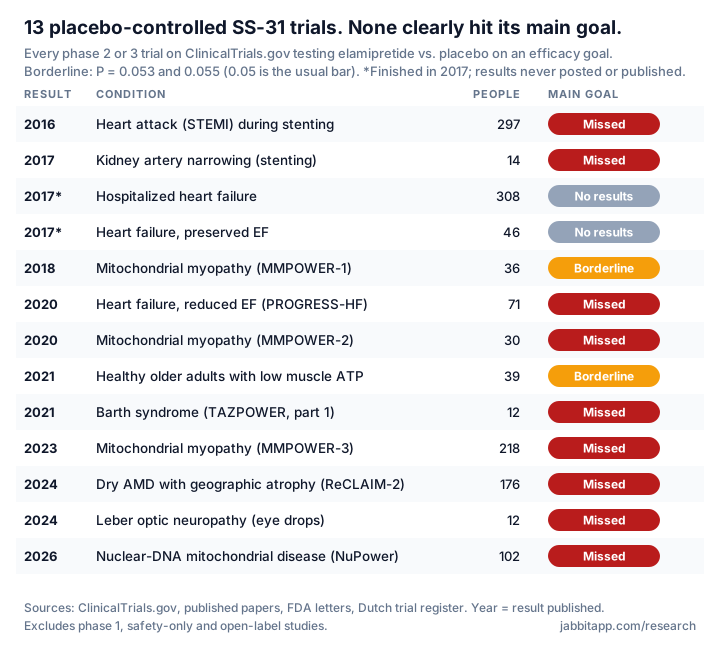
SS-31, sold by prescription as Forzinity (elamipretide), is what its maker calls the first FDA-approved mitochondria-targeted therapy.[1] On X it’s being injected for aging, energy and focus. We read every placebo-controlled phase 2 or 3 trial of it on ClinicalTrials.gov. There are 13, in heart attacks, heart failure, kidney disease, muscle disease, eye disease and healthy older adults. None clearly met its main goal: 9 missed, 2 came close (P = 0.053 and 0.055), and 2 heart-failure trials that finished in 2017 never posted results.[32] Its one approval, for an ultra-rare disease in about 150 Americans, came after FDA’s clinical and statistical reviewers recommended rejecting it, and it rests on strength gains measured without a placebo group in 8 to 10 patients.[6][3] No trial has tested it for aging.[32][30]
Why this matters this week
On October 14, Mighty Therapeutics (the company was called Stealth BioTherapeutics until June) marked one year since approval. It reported $17.5 million in gross sales since December, and said it is working toward a “placebo-controlled clinical trial of elamipretide in older adults, which will run through 2029” after an XPRIZE Healthspan award with the University of Washington.[1][2] On X, the peptide is moving the other way, ahead of the evidence. Posts this week describe “daily SS-31 microdoses,” stacking it with MOTS-c, and a 10 mg dose for focus. One eye surgeon says he uses SS-31 and MOTS-c “on some of my patients.”[35] English posts naming it ran at 24 to 43 a day from October 11 to 16, by our count.[35] One gray-market seller lists 50 mg vials at $59.99. The brand costs an estimated $793,520 a year.[35][9]
What SS-31 is, and where it came from
SS-31 is a four-amino-acid peptide (D-Arg-Dmt-Lys-Phe-NH2). It started as an opioid project. Peter Schiller at the Montreal Clinical Research Institute designed the parent opioid peptide analog around 2000, and Hazel Szeto’s lab at Cornell studied how such highly charged peptides got into cells.[10][12] In 2004, Szeto’s team found “by happenstance” that one of them piled up in mitochondria. Stealth Peptides was founded and licensed the compounds from Cornell in 2006.[11] SS-31 was built without the opioid activity. It binds cardiolipin, a fat in the inner mitochondrial membrane, and in lab and animal studies it helped mitochondria make energy and cut oxidant leaks.[10][13] The name “Szeto-Schiller” is where the SS comes from.[13]
The case for it: real mouse data in old muscle
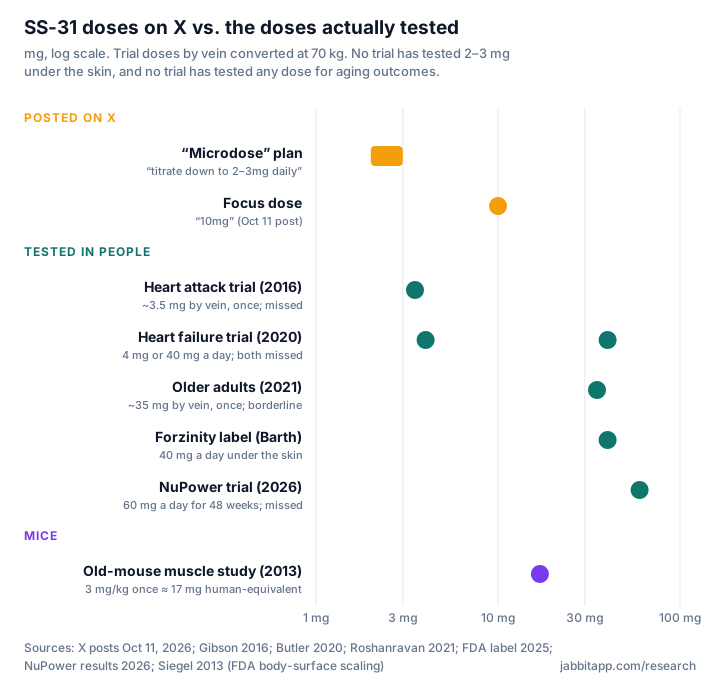
The aging hype isn’t made up. In 2013, University of Washington researchers gave 27-month-old mice (very old for mice) one 3 mg/kg injection. Within an hour, muscle energy output was back “to young levels.” It did nothing in young mice, and 8 days of treatment raised endurance.[14] A 2019 follow-up gave old mice 3 mg/kg a day for 8 weeks and again found better muscle energy and exercise tolerance.[15] By FDA’s standard conversion, that mouse dose equals about 17 mg for a 70 kg person.[36][14] PubMed lists 642 records mentioning SS-31 or elamipretide. Only 22 are tagged as clinical trials.[32]
Then came the human trials
The company first tried it as a heart drug. In the EMBRACE STEMI trial (published 2016), a one-hour infusion during stenting for heart attacks didn’t shrink heart damage.[17] There was one early hint: in a 2017 safety study, a single 4-hour infusion briefly shrank heart volumes at the highest dose, in 8 heart-failure patients.[19] The follow-up, PROGRESS-HF, in 71 heart-failure patients, found no change in heart size at 4 or 40 mg a day.[21] Two more heart-failure trials, with 308 and 46 patients, finished in 2017. Nine years later, neither has posted results, and we found no paper for either.[29] A small kidney pilot reported better blood flow, but its registered main measure, filtration rate, rose more on placebo (+12.0 vs +6.3 mL/min).[18]
Then muscle disease. MMPOWER-1 came close on the 6-minute walk at the high dose (P = 0.053), MMPOWER-2 missed, and the 218-person phase 3 MMPOWER-3 missed outright: patients on the drug walked 3.2 meters less than placebo.[20][22][25] In dry macular degeneration, ReCLAIM-2 (176 people aged 55 and up) missed both main goals, though a predefined scan measure of photoreceptor loss looked better.[26] Eye drops for an inherited optic nerve disease missed.[27] NuPower, a 102-person phase 3 in nuclear-DNA mitochondrial disease at 60 mg a day, posted results in April 2026: no more improvement than placebo at 48 weeks.[28]
The “27% more ATP in older adults” study
The human study behind the aging posts is a 2021 trial in healthy older adults, funded by the company.[16] Researchers screened 120 people and excluded 47 (39%) for having mitochondria that already worked well, then randomized 39. Each got one 2-hour infusion by vein, about 35 mg for a 70 kg person, and they measured one small hand muscle.[16] Peak ATP output rose 27% on the drug vs 12% on placebo. That missed the usual bar on the raw change (P = 0.055) and just made it on percent change (P = 0.045).[16] A week later the difference was gone, and the muscle was no more fatigue-resistant.[16] An X post this week cited the 27% figure without those details.[35] It’s a real signal in one muscle for a few hours. It isn’t evidence that daily shots slow aging.
How it got approved anyway
Barth syndrome is an inherited disease that damages cardiolipin. It affects about 150 people in the U.S.[6] In the randomized part of the Barth trial, 12 patients took elamipretide or placebo for 12 weeks each. It missed both main goals: walking distance (P = 0.97) and fatigue (P = 0.89).[5][23] FDA refused to even file the first application in 2021.[6] In October 2024, FDA’s advisers voted 10 to 6 that it was effective.[8] In May 2025, FDA rejected it. Its letter said open-label walking gains were “generally only 8-22 meters” for all but two patients, with “only a single subject” showing a larger increase that couldn’t be credited to the drug.[5] The 2021 paper, by contrast, had reported +95.9 meters at 36 weeks open-label.[23]
The company came back with knee strength. FDA’s Integrated Review shows its clinical and statistical reviewers, and the team leader, concluded there was “not substantial evidence of effectiveness on knee muscle strength” and recommended rejection again. They also wrote that elamipretide doesn’t “meaningfully impact the elevated cardiolipin ratio,” the defect it was supposed to fix.[6] The signing official, office director Hylton Joffe, approved it on September 19, 2025, accepting “more uncertainty than we would accept for more common diseases.”[6][4][7] On the label, median knee strength in the randomized part moved −5 N on placebo and +4 N on drug. The big gains came only in the open-label extension, +63 N in the 8 patients still there at week 168.[3][24] The confirmatory trial isn’t due until 2029.[4][31] Fairly stated: for a rare, serious disease with nothing else, FDA chose to accept weak evidence. That is a different thing from proof it works.
Doses on X vs. doses tested
The approved dose is 40 mg a day under the skin.[3] X posts describe tapering to “2-3mg daily” and “microdoses,” a twentieth to a thirteenth of that.[35] No trial has tested 2 to 3 mg under the skin for anything. The lowest daily dose tested, 4 mg in heart failure, did no better than placebo, and neither did 40 mg.[21] Higher wasn’t better either: 60 mg missed in NuPower.[28]
Safety: what the label and FDA’s files say
Injection-site reactions hit all 12 Barth patients on the drug, vs 8 of 12 on placebo. Redness occurred in every patient on drug vs a quarter on placebo.[3] The label warns of hypersensitivity, including serious reactions needing emergency care, “minutes to months” after starting.[3] In FDA’s files, a 20-year-old woman developed a cough and rash 15 minutes after an injection. Ambulance staff treated it as anaphylactic shock with adrenaline. FDA classified it as a serious allergic reaction, not anaphylaxis, because her breathing and blood pressure stayed normal.[6] In lab tests, elamipretide released histamine from rat mast cells at high concentrations, although rats on the drug didn’t reach those blood levels. The label says overdose signs are “likely to be histamine-related.”[6][3] The new UW aging study screens out people with “allergies/adverse effects from Fexofenadine,” an antihistamine.[30]
Eosinophils, a type of white blood cell, rose modestly, peaking around 90 days.[3] “Carcinogenicity studies have not been conducted”: FDA called the cancer risk “uncertain,” and the 2-year rat study isn’t due until 2029.[3][5][4] Elamipretide blocks MATE1, a kidney transporter that clears metformin, so FDA ordered an interaction study. The dose is halved for severe kidney disease.[3][4] No Barth patients 65 or older were studied.[3] In other trials, treatment-related side effects ran 76.5% vs 39.2% on placebo in NuPower. ReCLAIM-2 logged 18 serious adverse events in 117 patients on drug vs 6 in 59 on placebo, and 2 deaths vs none. In EMBRACE, 10 of 150 heart-attack patients on drug died vs 3 of 147 on placebo.[28][26][17] None of those differences was shown to be caused by the drug, and these trials weren’t built to test that. They are worth knowing when a paper or post calls it “safe.”
Who’s making the powder
FDA’s listing files from October 16 show 6 companies listing elamipretide as a bulk ingredient. 5 started after Forzinity’s approval, and 3 are labeled “for human prescription compounding.”[32][33] They are registered API makers in China (Qingdao Biopeptek since 2020, Shenzhen Alvantis and Shanghai-based El-Peptido since 2026), APISTER Lifesciences in India, and a Florida relabeler, DARMERICA. The sixth, SCH Global Services Private Limited, has no matching entry in FDA’s establishment registration file of the same date.[32][33] Elamipretide doesn’t need FDA’s peptide “bulks list,” the subject of the compounding policy now under White House review. Because it’s a component of an approved drug, a 503A pharmacy can compound it with a prescription, from registered-source powder with a certificate of analysis. The law bars pharmacies from compounding “essentially copies” of an approved drug “regularly or in inordinate amounts.”[34] The $59.99 “research” vials on X are outside that system entirely, and there is no public testing of what’s in them.[35]
What would change the picture
Three readouts matter. ReNEW, a 313-person phase 3 in dry macular degeneration, is due in the second half of 2027. It’s the trial most like an aging disease.[1][31] 4TAZPower, the confirmatory Barth trial, runs to 2029.[31][4] The only aging study registered now, UW’s SHAPE, is a 30-person, 4-week safety study with no placebo. The placebo-controlled older-adult trial the company describes isn’t on ClinicalTrials.gov yet.[30][1][32] Until then, the honest answer is that SS-31 helps old mouse muscle and gave a brief boost to one hand muscle in older adults, and it has not beaten placebo on any main goal in people.
Bottom line
SS-31 has a real mechanism and clean mouse data in aging muscle. In people, 13 placebo-controlled trials across heart, kidney, muscle and eye disease and healthy older adults produced no clear win on a main goal. FDA approved it for one ultra-rare disease over its own reviewers’ objections, on open-label strength gains in a few patients. Nobody has tested the doses posted on X, and cancer studies are still pending. If you’re considering it, that’s the evidence your doctor would be weighing.
References
- Mighty Therapeutics. Mighty Therapeutics reports business highlights, Barth syndrome commercial launch update, and pipeline progress. Press release, October 14, 2026 (gross revenue of $17.5 million from the December 2025 soft launch through September 2026, including $8.1 million in Q3 2026; 60 patient enrollment forms; 48 prescribers; ReNEW dry-AMD phase 3 “on track for top-level data read-out in the second half of 2027”; 4TAZPower “a global Phase 4 study to confirm the efficacy”; POLG pivotal study planned for 2027; XPRIZE Healthspan Milestone 2 award with the University of Washington and “a rigorous, placebo-controlled clinical trial of elamipretide in older adults, which will run through 2029”; up to $150 million from K2 HealthVentures and its founding investor). https://mightytx.com/mighty-therapeutics-reports-business-highlights-barth-syndrome-commercial-launch-update-and-pipeline-progress/. Checked October 17, 2026.
- Mighty Therapeutics. Mighty Therapeutics, formerly Stealth BioTherapeutics, announces new name honoring the mitochondrial disease community. Press release, June 16, 2026. https://www.prnewswire.com/news-releases/mighty-therapeutics-formerly-stealth-biotherapeutics-announces-new-name-honoring-the-mitochondrial-disease-community-302800915.html. Checked October 17, 2026.
- FDA. FORZINITY (elamipretide) injection, for subcutaneous use. Prescribing information, NDA 215244, revised 9/2025 (indication “to improve muscle strength” in Barth syndrome patients ≥30 kg, approved under accelerated approval on knee extensor strength; 40 mg once daily, 20 mg if eGFR <30; contains benzyl alcohol 20 mg/mL; hypersensitivity incl. serious reactions “minutes to months” after starting; injection-site reactions in 12 of 12 patients on drug vs 8 of 12 on placebo, erythema 100% vs 25%; eosinophilia peaking ~90 days; overdose signs “likely to be histamine-related”; no patients ≥65 in Barth studies; “Carcinogenicity studies have not been conducted”; MATE1 inhibitor; “not superior to placebo” on the randomized trial’s primary endpoints; knee strength gains “were not observed during the randomized trial but were observed during the extension period”; Table 3 median change in knee extensor strength at week 12: placebo −5 N, elamipretide +4 N; open-label week 168 +63 N in 8 patients). https://www.accessdata.fda.gov/drugsatfda_docs/label/2025/215244s000lbl.pdf. Checked October 17, 2026.
- FDA. NDA 215244 accelerated approval letter for Forzinity, signed September 19, 2025 (postmarketing requirements: 4802-1 confirmatory randomized trial, completion 09/2029, final report 03/2030; 4802-2 26-week TgRasH2 mouse carcinogenicity study; 4802-3 2-year rat carcinogenicity study, completion 10/2029, report 01/2030; 4802-4 metformin interaction study; rare pediatric disease priority review voucher). https://www.accessdata.fda.gov/drugsatfda_docs/appletter/2025/215244Orig1s000ltr.pdf. Checked October 17, 2026.
- FDA. Complete response letter to Stealth BioTherapeutics, NDA 215244, May 15, 2025, in Other Action Letters (original NDA submitted August 19, 2021; SPIBA-201 Part 1 6-minute walk P = 0.97 and fatigue score P = 0.89, “none of the secondary endpoints were even nominally statistically significant”; open-label 6-minute walk gains “generally only 8-22 meters … for all but two subjects”; “leaving only a single subject who had a larger increase”; problems with the natural-history comparison; elamipretide “did not improve the MLCL:CL ratio in an animal model”; “the human carcinogenic potential of elamipretide is uncertain”; manufacturing facility deficiencies). https://www.accessdata.fda.gov/drugsatfda_docs/nda/2025/215244Orig1s000OtherActionLtrs.pdf. Checked October 17, 2026.
- FDA. Integrated Review, NDA 215244, Forzinity (elamipretide), Reference ID 5592071 (“The clinical and biostatistical reviewers and the Cross-Discipline Team Leader (CDTL) conclude that there is not substantial evidence of effectiveness on knee muscle strength for accelerated approval and recommend a Complete Response action”; elamipretide “does not directly target the underlying genetic defect that causes BTHS, nor does it meaningfully impact the elevated cardiolipin ratio”; the signatory authority “agrees that there is more uncertainty than we would accept for more common diseases” but approves for a disease of “~150 subjects in the United States”; refuse-to-file October 18, 2021; expanded-access case of a 20-year-old woman whom ambulance staff “treated … as anaphylactic shock” with adrenaline, classified by FDA as a serious allergic reaction; histamine release from rat mast cells above 49 µM, with rat blood levels below that threshold). https://www.accessdata.fda.gov/drugsatfda_docs/nda/2025/215244Orig1s000IntegratedR.pdf. Checked October 17, 2026.
- FDA. FDA grants accelerated approval to first treatment for Barth syndrome. Press release, September 19, 2025. https://www.fda.gov/news-events/press-announcements/fda-grants-accelerated-approval-first-treatment-barth-syndrome. Checked October 17, 2026.
- Stealth BioTherapeutics. Stealth BioTherapeutics announces positive vote from FDA advisory committee meeting supporting potential approval of elamipretide for the treatment of Barth syndrome. Press release, October 11, 2024 (Cardiovascular and Renal Drugs Advisory Committee, October 10, 2024, 10 yes, 6 no). https://www.prnewswire.com/news-releases/stealth-biotherapeutics-announces-positive-vote-from-fda-advisory-committee-meeting-supporting-potential-approval-of-elamipretide-for-the-treatment-of-barth-syndrome-302273995.html. Checked October 17, 2026.
- Oregon State University Drug Use Research and Management Program. Orphan drug evaluation: elamipretide (FORZINITY), Pharmacy and Therapeutics Committee meeting February 5, 2026 (“Estimated Yearly Cost: $793,520”). https://www.orpdl.org/durm/meetings/meetingdocs/2026_02_05/archives/2026_02_05_Elamipretide_FORZINITY_OrphanEval.pdf. Checked October 17, 2026.
- Montreal Clinical Research Institute (IRCM). An exceptional event: treatment for a rare genetic disorder co-discovered at the IRCM approved by the FDA. News, October 9, 2025 (Schiller “developed mitochondria-targeting peptides based on an opioid peptide analogue he designed and synthesized in his laboratory in the year 2000”; treatment “in a phase 3 clinical trial and also through an Expanded Access Program, resulted in significantly improved muscle strength”). https://www.ircm.qc.ca/en/news-detail/an-exceptional-event-treatment-for-a-rare-genetic-disorder-co-discovered-at-the-ircm-approved-by-the-fda. Checked October 17, 2026.
- Weill Cornell Medicine Alumni. The winding road from bench to FDA approval of the first mitochondria-targeting drug. December 4, 2025 (Szeto’s team found the mitochondrial targeting “by happenstance” in 2004; Stealth Peptides founded and licensed the peptides from Cornell in 2006). https://alumni.weill.cornell.edu/programs-events/news/winding-road-bench-fda-approval-first-mitochondria-targeting-drug. Checked October 17, 2026.
- Zhao K, Luo G, Zhao GM, Schiller PW, Szeto HH. Transcellular transport of a highly polar 3+ net charge opioid tetrapeptide. J Pharmacol Exp Ther. 2003;304(1):425-432. doi:10.1124/jpet.102.040147. PMID 12490619. https://pubmed.ncbi.nlm.nih.gov/12490619/. Checked October 17, 2026.
- Szeto HH. First-in-class cardiolipin-protective compound as a therapeutic agent to restore mitochondrial bioenergetics. Br J Pharmacol. 2014;171(8):2029-2050. doi:10.1111/bph.12461. PMC3976620. https://pmc.ncbi.nlm.nih.gov/articles/PMC3976620/. Checked October 17, 2026.
- Siegel MP, Kruse SE, Percival JM, et al. Mitochondrial-targeted peptide rapidly improves mitochondrial energetics and skeletal muscle performance in aged mice. Aging Cell. 2013;12(5):763-771. doi:10.1111/acel.12102. PMID 23692570 (27-month-old mice, single 3 mg/kg injection into the belly; muscle energetics restored “to young levels … after only one hour”; no effect in young mice; 8 days of treatment raised endurance). https://pubmed.ncbi.nlm.nih.gov/23692570/. Checked October 17, 2026.
- Campbell MD, Duan J, Samuelson AT, et al. Improving mitochondrial function with SS-31 reverses age-related redox stress and improves exercise tolerance in aged mice. Free Radic Biol Med. 2019;134:268-281. doi:10.1016/j.freeradbiomed.2018.12.031. PMID 30597195 (26-month-old female mice, 3 mg/kg/day for 8 weeks). https://pubmed.ncbi.nlm.nih.gov/30597195/. Checked October 17, 2026.
- Roshanravan B, Liu SZ, Ali AS, et al. In vivo mitochondrial ATP production is improved in older adult skeletal muscle after a single dose of elamipretide in a randomized trial. PLoS One. 2021;16(7):e0253849. doi:10.1371/journal.pone.0253849. PMID 34264994; PMC8282018; NCT02245620 (120 screened; 47 excluded for high mitochondrial function; 39 randomized; one 2-hour IV infusion at 0.25 mg/kg/h; first dorsal interosseous hand muscle; change in ATPmax P = 0.055, percent change P = 0.045, mean increase 27% vs 12%; no difference at day 7; no effect on fatigue resistance; funded by Stealth BioTherapeutics; authors report consulting payments from Stealth). https://pmc.ncbi.nlm.nih.gov/articles/PMC8282018/. Checked October 17, 2026.
- Gibson CM, Giugliano RP, Kloner RA, et al. EMBRACE STEMI study: a phase 2a trial to evaluate the safety, tolerability, and efficacy of intravenous MTP-131 on reperfusion injury in patients undergoing primary percutaneous coronary intervention. Eur Heart J. 2016;37(16):1296-1303. doi:10.1093/eurheartj/ehv597. PMID 26586786 (0.05 mg/kg/h for 1 h; no significant reduction in infarct size; “safe and well tolerated”). https://pubmed.ncbi.nlm.nih.gov/26586786/. ClinicalTrials.gov results for NCT01572909: deaths 10 of 150 on drug vs 3 of 147 on placebo; serious adverse events 20 vs 14. https://clinicaltrials.gov/study/NCT01572909. Checked October 17, 2026.
- Saad A, Herrmann SMS, Eirin A, et al. Phase 2a clinical trial of mitochondrial protection (elamipretide) during stent revascularization in patients with atherosclerotic renal artery stenosis. Circ Cardiovasc Interv. 2017;10(9):e005487. doi:10.1161/CIRCINTERVENTIONS.117.005487. PMID 28916603 (6 on drug, 8 on placebo; renal blood flow and estimated GFR rose in the drug group). https://pubmed.ncbi.nlm.nih.gov/28916603/. ClinicalTrials.gov NCT01755858 posted primary outcome, measured GFR change: +6.3 mL/min on drug vs +12.0 mL/min on placebo. https://clinicaltrials.gov/study/NCT01755858. Checked October 17, 2026.
- Daubert MA, Yow E, Dunn G, et al. Novel mitochondria-targeting peptide in heart failure treatment: a randomized, placebo-controlled trial of elamipretide. Circ Heart Fail. 2017;10(12):e004389. doi:10.1161/CIRCHEARTFAILURE.117.004389. PMID 29217757; NCT02388464 (single 4-hour infusion, 8 per dose cohort, 12 on placebo; primary endpoint safety; heart volumes fell at end-infusion in the highest dose cohort). https://pubmed.ncbi.nlm.nih.gov/29217757/. Checked October 17, 2026.
- Karaa A, Haas R, Goldstein A, et al. Randomized dose-escalation trial of elamipretide in adults with primary mitochondrial myopathy. Neurology. 2018;90(14):e1212-e1221. doi:10.1212/WNL.0000000000005255. PMID 29500292; NCT02367014 (MMPOWER-1; 36 patients; 6-minute walk +64.5 m at the high dose vs +20.4 m on placebo, P = 0.053; dose trend P = 0.014). https://pubmed.ncbi.nlm.nih.gov/29500292/. Checked October 17, 2026.
- Butler J, Khan MS, Anker SD, et al. Effects of elamipretide on left ventricular function in patients with heart failure with reduced ejection fraction: the PROGRESS-HF phase 2 trial. J Card Fail. 2020;26(5):429-437. doi:10.1016/j.cardfail.2020.02.001. PMID 32068002; NCT02788747 (71 patients; 4 or 40 mg a day for 4 weeks; no change in LV end-systolic volume, P = 0.90 and 0.28). https://pubmed.ncbi.nlm.nih.gov/32068002/. Checked October 17, 2026.
- Karaa A, Haas R, Goldstein A, et al. A randomized crossover trial of elamipretide in adults with primary mitochondrial myopathy. J Cachexia Sarcopenia Muscle. 2020;11(4):909-918. doi:10.1002/jcsm.12559. PMID 32096613; NCT02805790 (MMPOWER-2; 30 patients; 6-minute walk +19.8 m, P = 0.0833). https://pubmed.ncbi.nlm.nih.gov/32096613/. Checked October 17, 2026.
- Reid Thompson W, Hornby B, Manuel R, et al. A phase 2/3 randomized clinical trial followed by an open-label extension to evaluate the effectiveness of elamipretide in Barth syndrome. Genet Med. 2021;23(3):471-478. doi:10.1038/s41436-020-01006-8. PMID 33077895; NCT03098797 (TAZPOWER; 12 randomized; “In part 1 neither primary endpoint was met”; at 36 weeks open-label, 6-minute walk +95.9 m in 8 subjects; one author employed by Stealth). https://pubmed.ncbi.nlm.nih.gov/33077895/. Checked October 17, 2026.
- Thompson WR, Manuel R, Abbruscato A, et al. Long-term efficacy and safety of elamipretide in patients with Barth syndrome: 168-week open-label extension results of TAZPOWER. Genet Med. 2024;26(7):101138. doi:10.1016/j.gim.2024.101138. PMID 38602181. https://pubmed.ncbi.nlm.nih.gov/38602181/. Checked October 17, 2026.
- Karaa A, Bertini E, Carelli V, et al. Efficacy and safety of elamipretide in individuals with primary mitochondrial myopathy: the MMPOWER-3 randomized clinical trial. Neurology. 2023;101(3):e238-e252. doi:10.1212/WNL.0000000000207402. PMID 37268435; NCT03323749 (218 patients; 6-minute walk −3.2 m vs placebo, P = 0.69; fatigue P = 0.37). https://pubmed.ncbi.nlm.nih.gov/37268435/. Checked October 17, 2026.
- Ehlers JP, Hu A, Boyer D, et al. ReCLAIM-2: a randomized phase II clinical trial evaluating elamipretide in age-related macular degeneration, geographic atrophy growth, visual function, and ellipsoid zone preservation. Ophthalmol Sci. 2025;5(1):100628 (published online October 2024). doi:10.1016/j.xops.2024.100628. PMID 39605874; NCT03891875 (176 patients aged ≥55; 40 mg a day for 48 weeks; “did not meet statistical significance for the primary end points”; 43% and 47% less progression of ellipsoid-zone loss, nominal P = 0.0034 and 0.0040). https://pubmed.ncbi.nlm.nih.gov/39605874/. ClinicalTrials.gov results: deaths 2 of 117 vs 0 of 59; serious adverse events 18 of 117 vs 6 of 59. https://clinicaltrials.gov/study/NCT03891875. Checked October 17, 2026.
- Karanjia R, Sadun AA. Elamipretide topical ophthalmic solution for the treatment of subjects with Leber hereditary optic neuropathy: a randomized trial. Ophthalmology. 2024;131(4):422-433. doi:10.1016/j.ophtha.2023.10.033. PMID 37923251; NCT02693119 (12 patients; visual acuity not significantly different). https://pubmed.ncbi.nlm.nih.gov/37923251/. Checked October 17, 2026.
- Overview of Medical Research in the Netherlands (onderzoekmetmensen.nl). NuPower: a phase 3 trial of elamipretide in nuclear-DNA mitochondrial myopathy (NL-004124; NCT05162768), summary of results posted April 15, 2026 (102 patients; 60 mg a day; elamipretide “did not show more improvements” in the 6-minute walk at week 48 than placebo; treatment-related adverse events 76.5% vs 39.2%). https://onderzoekmetmensen.nl/en/node/51595/pdf. Checked October 17, 2026.
- ClinicalTrials.gov. NCT02914665: elamipretide in subjects hospitalized with congestive heart failure (308 enrolled; 20 mg a day by vein for 7 days; completed November 27, 2017; no results posted). https://clinicaltrials.gov/study/NCT02914665. NCT02814097: elamipretide in heart failure with preserved ejection fraction (46 enrolled; completed June 2, 2017; no results posted). https://clinicaltrials.gov/study/NCT02814097. Jabbit found no PubMed record for either NCT number. Checked October 17, 2026.
- ClinicalTrials.gov. NCT07275424: Study of Healthy Aging and Physical Function With Elamipretide (SHAPE), University of Washington (30 adults aged 65–80; open-label, one arm, no placebo; primary outcome safety and tolerability of daily injections; eligibility includes “No known allergies/adverse effects from Fexofenadine”). https://clinicaltrials.gov/study/NCT07275424. Checked October 17, 2026.
- ClinicalTrials.gov. NCT06373731: ReNEW, phase 3 study of subcutaneous elamipretide in dry AMD (313 enrolled; primary outcome photoreceptor-loss growth at week 48). https://clinicaltrials.gov/study/NCT06373731. NCT07531251: 4TAZPower, Barth syndrome (48 planned; randomized, placebo-controlled). https://clinicaltrials.gov/study/NCT07531251. Checked October 17, 2026.
- Jabbit analysis. SS-31 / elamipretide trials, FDA listings and PubMed counts, October 17, 2026: 30 ClinicalTrials.gov records that give the drug; 13 placebo-controlled phase 2 or 3 trials with an efficacy primary endpoint, hand-reviewed; FDA NDC bulk-ingredient and establishment-registration files dated October 16, 2026; PubMed counts. Data: https://jabbitapp.com/research/sources/ss31-elamipretide-trials-listings-2026-10-17.json. Script: ops/scripts/ss31_analysis.py. Checked October 17, 2026.
- FDA. NDC Directory, unfinished drugs file and drug establishment registration file, downloaded October 16, 2026 (substance ELAMIPRETIDE: 6 bulk-ingredient listings). https://www.fda.gov/drugs/drug-approvals-and-databases/national-drug-code-directory. Checked October 17, 2026.
- 21 U.S.C. § 353a (FD&C Act section 503A), pharmacy compounding: bulk drug substances must comply with a USP monograph, be “components of drugs approved by the Secretary,” or appear on FDA’s list, and come with a certificate of analysis from a registered establishment; pharmacies may not compound “regularly or in inordinate amounts … any drug products that are essentially copies of a commercially available drug product.” https://www.law.cornell.edu/uscode/text/21/353a. Checked October 17, 2026.
- Posts on X about SS-31, October 10–17, 2026: @alc2022, October 17 (“daily SS-31 microdoses”), https://x.com/alc2022/status/2111432982506398104; @pepfessions, October 16 (“Started Mots-C after 4 weeks of SS-31”), https://x.com/pepfessions/status/2111143972382949629; @whey777, October 13 (“Everyone’s mitochondria decline with age”), https://x.com/whey777/status/2109868027596451961; @theeyesurgeon, October 11 (“using SS-31 and mots-c on some of my patients”), https://x.com/theeyesurgeon/status/2109327453521154212; @JGforce46, October 11 (“titrate down to 2-3mg daily”), https://x.com/JGforce46/status/2109139242953928732; @KevinPomaski, October 11 (“10mg”), https://x.com/KevinPomaski/status/2109433090967994678; @regenhealthapp, October 17 (“SS-31 raised muscle ATP max 27%”), https://x.com/regenhealthapp/status/2111329354139533452; @PepTechUS, October 17 (“SS-31 50 mg vials ($59.99 each)”), https://x.com/PepTechUS/status/2111449871450259909. Jabbit count of posts matching SS-31, SS31, elamipretide or Forzinity, excluding reposts, English only, October 11–16 (UTC): 24, 24, 43, 31, 36, 35 a day. Checked October 17, 2026.
- FDA. Guidance for industry: estimating the maximum safe starting dose in initial clinical trials for therapeutics in adult healthy volunteers. July 2005 (mouse-to-human conversion: divide mg/kg by 12.3). https://www.fda.gov/media/72309/download. Checked October 17, 2026.
This page summarizes published research and regulatory documents. It is not medical advice and does not recommend using, sourcing, or dosing any of these substances.