Home / Research / CJC-1295 + ipamorelin teardown
Paper-trail teardown · FDA reviews and votes, a patent, company releases, trial registries, the tesamorelin label and original papers read · Sources checked October 17, 2026
Does the CJC-1295 and ipamorelin stack work? Nobody has tested it in people, and FDA’s advisers voted against both halves.
CJC-1295 and ipamorelin are sold together as a growth hormone stack for sleep, fat loss and recovery. The idea has a real basis: drugs that hit these two receptors at once released far more growth hormone in a 1993 test than either alone.[29] But no published trial has given this pair to people.[1][2][34][35] The “CJC-1295” in most stacks, the version without DAC, has never been given to a person in any published study.[1][34] FDA’s advisers voted against CJC-1295 by 0 to 13 and against ipamorelin by 0 to 12 in 2024.[3][4] The approved drug in this family, tesamorelin (Egrifta), shows what the approach can do and what it costs.[24]
Why this matters this week
On October 14, 2026 FDA sent an “Interim Access Policy for Compounding Using Certain Peptides” to the White House for review. The listing names no peptides, the text isn’t public, and the review was still open when we checked on October 17.[6] A meeting about it is booked with White House reviewers for October 21 at 3 PM, requested by the American Academy of Peptide Medicine. The requestor listed is Lee Rosebush,[7] who also spoke at FDA’s public hearings on ipamorelin and CJC-1295 in 2024.[3][4]
What hasn’t been reported is where these two drugs stand. FDA’s advisers already rejected both in 2024. Neither is on the agenda of the July 2026 meeting or the one due by February 2027.[3][4][8] Ipamorelin is still on FDA’s list of compounding substances with significant safety risks for outsourcing facilities.[5] Meanwhile we counted 682 posts on X mentioning tesamorelin, ipamorelin or CJC-1295 in the seven days to October 17, rising from 85 on October 11 to 134 on October 16. They come with doses and promises: “250mcg/250mcg nightly,” “the pair outruns either one alone,” “Legal nationwide access to compounded peptides is here.”[36] So we traced both drugs back to their first papers.
Two drugs, two switches
Growth hormone release from the pituitary has two main “go” signals. One is GHRH, a hormone from the brain. The other is ghrelin, a gut hormone that also acts on the pituitary. CJC-1295 is a lab-made copy of the active first 29 amino acids of GHRH, with four of them swapped to make it last longer.[1][14] Ipamorelin is a five-amino-acid peptide that Novo Nordisk built in the 1990s to work on the ghrelin receptor.[20] Its selling point in animals was selectivity. In pigs it released growth hormone without raising the stress hormones ACTH and cortisol, “even at doses more than 200-fold higher” than the dose that worked.[20]
Pairing the two signals isn’t a gym myth. In a 1993 study in Spain, groups of people with obesity got a single IV dose of GHRH, of GHRP-6 (an older cousin of ipamorelin), or both. Peak growth hormone averaged 6.8 µg/L after GHRH, 15.7 after GHRP-6, and 42.2 after both together.[29] That is a real strength of the stack’s logic. It was a one-time spike with different molecules, though, not CJC-1295 and ipamorelin, and a bigger hormone spike isn’t the same thing as better sleep or less fat.
“CJC-1295” is two different drugs
The CJC-1295 that was tested in people carries an extra chemical hook called DAC (drug affinity complex). After injection it latches onto albumin, the most common protein in blood, and that stretches its half-life in people to 5.8 to 8.1 days.[10][13] The version in most of the stack posts we read is CJC-1295 without DAC, also sold as “Mod GRF 1-29.” It is the same 29 amino acids without the hook.[1][36] FDA counted at least five different substances under the CJC-1295 name and warned that the “inconsistent naming conventions” are themselves a safety risk.[1]
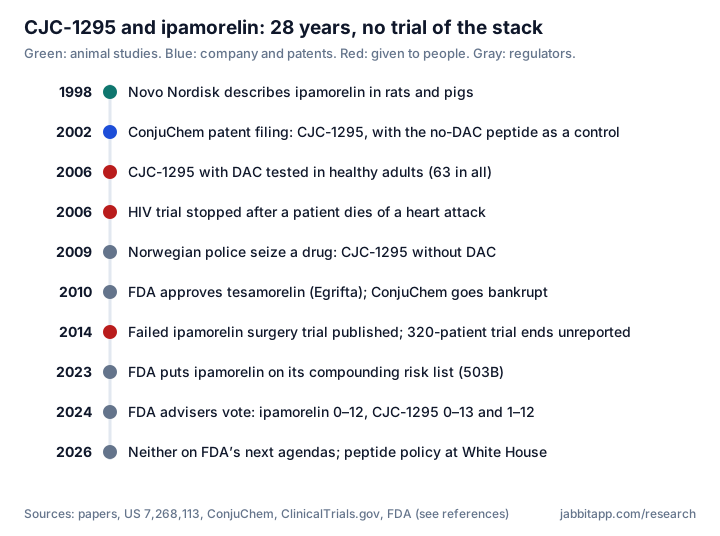
FDA’s 2024 review found no study establishing whether CJC-1295 without DAC is even pharmacologically active.[1] It called a 2010 report the first mention of it in the scientific literature: a Norwegian anti-doping lab identified it in an unknown preparation that police and customs had sent for testing in 2009.[1][19] But there is an older record. ConjuChem, the Montreal company that invented CJC-1295, made the no-DAC peptide in its 2002 patent application, as the plain comparison for the DAC version. The patent’s figures show it releasing growth hormone from rat pituitary cells and in rats. In rat blood, though, it “disappears very rapidly” and “could not be detected after 60 minutes,” whether injected under the skin or into a vein. The DAC version was still detectable at 96 hours.[14] That rat comparison is the only measurement of the no-DAC peptide in a living body that we found. Nobody has published a study giving it to a person.[34][35]
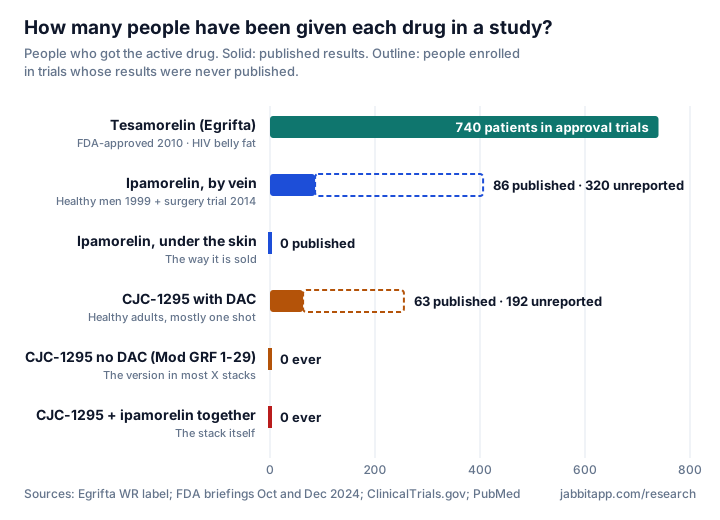
What happened when CJC-1295 was given to people
ConjuChem tested the DAC version in healthy adults aged 21 to 61. A single injection raised growth hormone 2 to 10 times for at least six days and IGF-1, the hormone growth hormone drives, 1.5 to 3 times for 9 to 11 days.[10] A second team found the body’s normal growth hormone pulses kept going on top of the raised baseline, with IGF-1 up 45% in 12 young men.[11] So the drug did what it was designed to do.
Side effects were common. In the first ConjuChem trial, 33 of 35 people on the drug reported an adverse event, against 2 of 7 on placebo. About 70% had injection-site reactions, 63% had headaches (14% on placebo), 43% had diarrhea, and 30% had “systemic vasodilatory reactions”: flushing, warmth and brief drops in blood pressure. In the second trial, flushing hit 40% of people at the low dose and all of them at the high dose. One person had brief involuntary leg contractions and some loss of coordination.[1] In all, FDA counted 63 healthy adults in the published studies. 87% were men, and 73% got a single injection. FDA found no study in which any form of CJC-1295 was given to people with a disease.[1][12]
The one trial in patients didn’t finish. ConjuChem enrolled 192 people with HIV-related fat changes and gave weekly injections planned for 12 weeks. On July 13, 2006, a patient in Argentina got his 11th weekly dose. About two hours later he had chest discomfort, an ECG confirmed a heart attack, and he died about an hour after that.[16] The company stopped dosing the next day.[15] The trial doctor thought the most likely cause was undiagnosed heart disease and that the death was unrelated to the drug.[1] The program never resumed, no results were ever posted or published,[1][17] and ConjuChem went bankrupt in 2010.[18]
Ipamorelin’s record in people
Two companies gave ipamorelin to people, and both did it by vein. In 1999 Novo Nordisk infused five dose levels into healthy men, six men per dose. It cleared with a half-life of about two hours. Growth hormone spiked once, peaking at about 40 minutes, and was back to very low levels by six hours.[21][2] FDA’s summary notes the lowest dose produced growth hormone levels too small to include in the analysis.[2]
The drugmaker Helsinn then tried it for the gut paralysis that can follow bowel surgery. In a trial of 114 patients, ipamorelin at 0.03 mg/kg twice daily by vein didn’t beat placebo: median time to a first tolerated meal was 25.3 hours versus 32.6, a difference that wasn’t statistically significant (p = 0.15).[22] FDA’s review lists more low potassium (12.5% versus 3.4%) and high blood sugar at discharge (14.3% versus 8.6%) on ipamorelin. Two patients on ipamorelin died after leaks at the site where their bowel was rejoined. FDA says it is unclear whether ipamorelin played a role,[2] and that study is the “death” in FDA’s safety listing.[5]
Then Helsinn ran a bigger trial. The registry shows 320 patients randomized to three ipamorelin doses, up to 0.06 mg/kg three times a day, or placebo. It finished in May 2014. No results were posted, and we found no paper.[23][34] FDA says development was discontinued.[2] FDA also found no human data at all for ipamorelin injected under the skin, which is how it is sold.[2]
What we found when we did the math on doses
A common X dose is 250 to 300 mcg of ipamorelin under the skin at night, often with the same amount of CJC-1295 without DAC.[36] For a 70 to 80 kg adult, that’s about 3 to 4 mcg per kg. Novo’s lowest IV dose, 4.21 nmol/kg, works out to about 3 mcg per kg, or 0.21 mg for a 70 kg man, using ipamorelin’s molecular weight of 711.85.[2][21] That is the dose group FDA says produced growth hormone levels too low to analyze.[2] Helsinn’s failed surgery trial used 0.03 mg/kg (2.1 mg for a 70 kg adult), about seven to eight times the X dose, by vein, twice a day.[22]
| Drug and source | Route | Dose for a 70 kg adult |
|---|---|---|
| Ipamorelin, common X dose | Under the skin | 0.25–0.3 mg, nightly |
| Ipamorelin, Novo 1999, lowest dose | Vein, 15 minutes | ≈0.21 mg; GH “negligible” per FDA |
| Ipamorelin, Novo 1999, highest dose | Vein, 15 minutes | ≈7 mg |
| Ipamorelin, Helsinn surgery trial | Vein | 2.1 mg, twice a day |
| CJC-1295 without DAC, X posts | Under the skin | 0.1 mg, 2–3 times a day; never tested in people |
| CJC-1295 with DAC, ConjuChem trials | Under the skin | 2.1–17.5 mg (30–250 mcg/kg), mostly once |
| Tesamorelin (Egrifta WR), label | Under the skin | 1.28 mg daily |
This is our arithmetic, and it has limits. An injection under the skin is absorbed differently from an IV drip, the Novo study was in healthy young men, and nobody has measured what an under-the-skin dose does in people.[2] The point is narrower: the doses on X sit at the bottom of the only human dose range ever tested, and they were never tested by the route people use.
FDA’s advisers already voted on both
On October 29, 2024, FDA asked its compounding advisers whether ipamorelin should go on the list of substances regular pharmacies may use. FDA reviewed it for growth hormone deficiency and post-surgery gut paralysis. Both forms lost 0 to 12, with 1 abstention. Members who voted no cited “a lack of information supporting safety and efficacy.” One added that “the high frequency of a drug being prescribed does not necessarily mean the drug is safe and effective.”[4]
On December 4, 2024, the same committee voted on five forms of CJC-1295, with and without DAC, for growth hormone deficiency. Four lost 0 to 13 and one lost 1 to 12.[3] AOD-9604 and thymosin alpha-1 were rejected at the same meeting.[3] An April 2026 law-firm analysis points to that history as precedent: peptides that came off FDA’s risk list after their nominations were withdrawn were then reviewed, and the committee recommended against each.[9]
In April 2026 FDA took 12 other peptides off that risk list and scheduled them for new meetings in July 2026 and by February 2027. CJC-1295 and ipamorelin aren’t on either agenda.[8][9] Ipamorelin is still listed as a significant safety risk for outsourcing facilities.[5] Committee votes are advice, not law, and the agency can depart from them.[9] Whether the policy now at the White House covers these two drugs is unknown, because its text isn’t public.[6]
Tesamorelin: what an approved version shows
Tesamorelin is also a lab-made GHRH, built on the hormone’s full 44 amino acids, and FDA approved it as Egrifta on November 10, 2010.[25][27] Unlike CJC-1295 and ipamorelin, it has large randomized trials behind it. In two 26-week trials in 816 people with HIV and excess belly fat, a daily 2 mg injection cut deep belly (visceral) fat by 15.2% versus a 5.0% rise on placebo in the first trial, and by 10.9% versus 0.6% on placebo in the second.[26][27] That is the “approval data” people cite on X, and it’s real.[36][24] It is approved only for that use. The label says it is “not indicated for weight loss management as it has a weight neutral effect.”[24]
The same label lists the costs, which apply to the whole idea of pushing this system. People who stopped lost the benefit: in the two trials, visceral fat rose 22% and 16% over the next 26 weeks in patients switched to placebo.[24][27] New diabetes-range blood sugar (HbA1c of 6.5% or more) showed up in 5% versus 1% on placebo. Nearly half of patients (47%) had IGF-1 levels more than two standard deviations above normal by 26 weeks, and the label says “the effects of prolonged elevations in IGF-1 levels are unknown.” Fluid retention, joint pain and carpal tunnel syndrome are listed warnings.[24] Half of patients made antibodies to tesamorelin. In about 60% of those, the antibodies also reacted with the body’s own GHRH, and by week 52 some patients had antibodies that blocked tesamorelin (10%) or natural GHRH (5%) in lab tests.[24] FDA raised that same risk for CJC-1295, which shares 86% of its sequence with natural GHRH.[1] Tesamorelin’s label shows it isn’t hypothetical for this class.
The longevity question
Growth hormone falls with age, and restoring it is the pitch behind many of these stacks. The most direct test of the idea is giving growth hormone itself to healthy older people. A 2007 review pooled 18 trials with 220 people on growth hormone. They lost 2.1 kg of fat and gained 2.1 kg of lean mass with no change in weight, and they had more swelling, joint pain, carpal tunnel syndrome and breast growth in men, plus a little more diabetes. The authors concluded that growth hormone “cannot be recommended as an antiaging therapy.”[30]
The best evidence in this family for older people comes from tesamorelin, not CJC-1295. In a 20-week University of Washington trial, 152 adults aged 55 to 87 injected 1 mg nightly. Executive function scores improved versus placebo, body fat fell 7.4%, and IGF-1 rose 117% but stayed within the normal range. Fasting insulin rose 35% in those with mild memory problems, and 68% reported side effects versus 36% on placebo.[28] It was promising and short, and it hasn’t been repeated at scale.
The other side of the ledger: people in Ecuador born unable to respond to growth hormone had almost no cancer or diabetes over 22 years of follow-up.[31] Dwarf mice that make very little growth hormone outlive their normal littermates.[33] Among 184 people in their 90s, women with lower IGF-1 lived longer.[32] None of this proves that raising growth hormone shortens life. It does mean more growth hormone and IGF-1 is not a settled longevity lever, and nobody has tested whether this stack helps or harms people as they age.
Checking the claims going around this week
“The pair outruns either one alone.” For a single growth hormone spike, with older drugs of the same two types, yes.[29] For CJC-1295 with ipamorelin, nobody has measured it in people, and nobody has tested whether a bigger spike changes sleep, fat or recovery.[1][2][34]
“No DAC clears in about 30 minutes… 100mcg SubQ, 2–3x daily… deeper sleep the first week.” There is no human measurement of how fast it clears, no tested dose and no sleep study. The only data on how long it lasts come from rats, in which it was undetectable within an hour.[1][14][36]
“A quick flush after the pin is normal.” Flushing was common in the CJC-1295 trials: up to all participants at the high dose, sometimes with drops in blood pressure.[1] FDA lists “systemic vasodilatory reaction” among the serious adverse events it found for CJC-1295.[5] Common isn’t the same as harmless.
“Tesamorelin has approval data behind it” and “can nudge blood sugar up.” Both true. The approval covers belly fat in HIV lipodystrophy, not weight loss, and the label reports new diabetes-range blood sugar in 5% versus 1%.[24][36]
“Legal nationwide access to compounded peptides is here.” Not as of October 17. The policy hasn’t cleared White House review, its list of peptides isn’t public, and ipamorelin is still on FDA’s safety-risk list for outsourcing facilities.[6][5]
Safety: what isn’t known
No one has run the two-year cancer studies for any form of CJC-1295. Mice engineered to overproduce GHRH develop enlarged pituitaries and pituitary tumors, which is why FDA flagged the gap.[1] In a mouse study, eight weeks of CJC-1295 with DAC enlarged the pituitary and caused DNA damage in pituitary cells.[1] Animal studies found bleeding, inflammation and tissue death at injection sites.[1] FDA’s adverse event database had almost nothing on either drug: two unusable reports for CJC-1295 through June 2024 and two non-serious reports for ipamorelin through September 2023.[1][2] That reflects how little these drugs reach formal reporting, not proof of safety. The only outsourcing facility that reported making CJC-1295 made it premixed with ipamorelin in 2019 and 2020, and none has reported it since.[1]
Bottom line
The logic of the stack is sound biology: two separate signals for growth hormone, which together produced a bigger spike in older studies.[29] CJC-1295 with DAC reliably raised growth hormone and IGF-1 in healthy adults, and tesamorelin proved a GHRH drug can shrink visceral fat in a large trial.[10][26] Everything past that is untested. The no-DAC CJC-1295 in most stacks has never been studied in a person. Ipamorelin was only ever tested by vein, and its larger trial was never reported. The pair has never been tested together. FDA’s advisers rejected both in 2024.[1][2][3][4][23] If the White House clears FDA’s policy, the question of whether pharmacies can sell them may change. Whether they work won’t.
References
- U.S. Food and Drug Administration. Pharmacy Compounding Advisory Committee briefing document: CJC-1295-related bulk drug substances (CJC-1295 free base and acetate; CJC-1295 DAC free base, acetate and trifluoroacetate), for the December 4, 2024 meeting. Sections on naming (“at least five BDSs”; “inconsistent naming conventions … represents a safety risk”), the first literature reference to CJC-1295 without DAC (Henninge et al. 2010), pharmacology (“FDA has not identified studies to establish whether CJC-1295 (free base) and CJC-1295 acetate are pharmacologically active”), genotoxicity (Ben-Shlomo et al. 2020, CJC-1295 DAC in mouse pituitary cells and mice), absent carcinogenicity studies and GHRH-transgenic mouse pituitary tumors, 86% homology with endogenous GHRH, human studies (“a total of 63 healthy adults (87% of the subjects were men) received up to four SC injections (73% of subjects received one injection)”; Teichman adverse events), “No studies were found in which any form of CJC-1295 was administered to subjects with a disease or condition,” the 2006 phase 2 death, FAERS through June 10, 2024, online doses, and the 2019–2020 outsourcing-facility combination with ipamorelin. https://www.fda.gov/media/183819/download. Checked October 17, 2026.
- U.S. Food and Drug Administration. Pharmacy Compounding Advisory Committee briefing document: ipamorelin-related bulk drug substances (ipamorelin free base and acetate), for the October 29, 2024 meeting. Molecular weight 711.85 g/mol; Gobburu et al. 1999 summary (“Five groups with 6 healthy male subjects per group … over a 15-minute IV infusion and 2 subjects per group received placebo”; “The lowest dose of 4.21 nmol/kg group and placebo groups were not included in the PK/PD analysis due to negligible GH levels”); “FDA did not identify PK or PD information for the proposed SC route”; Beck et al. 2014 adverse events and two deaths (“it is unclear whether the two deaths were related to ipamorelin”); development discontinued (citing Ishida et al. 2020); FAERS through September 30, 2023 (two non-serious reports); M-CERSI report of a “trending” combination with CJC-1295. https://www.fda.gov/media/182088/download. Checked October 17, 2026.
- U.S. Food and Drug Administration. Summary minutes of the Pharmacy Compounding Advisory Committee, December 4, 2024 (approved February 21, 2025). CJC-1295 votes, use reviewed growth hormone deficiency: free base 0 yes / 13 no; acetate 1 / 12; DAC free base, DAC acetate and DAC trifluoroacetate 0 / 13 each (“One member commented on the lack of evidence for effectiveness”). AOD-9604 0 / 12; thymosin alpha-1 4 / 17. Open public hearing speakers for CJC-1295 include Lee Rosebush (BakerHostetler). https://www.fda.gov/media/185642/download. Meeting page: https://www.fda.gov/advisory-committees/advisory-committee-calendar/updated-meeting-time-and-public-participation-information-december-4-2024-meeting-pharmacy. Checked October 17, 2026.
- U.S. Food and Drug Administration. Summary minutes of the Pharmacy Compounding Advisory Committee, October 29, 2024 (approved January 15, 2025). Ipamorelin free base and ipamorelin acetate, uses reviewed growth hormone deficiency and postoperative ileus: 0 yes / 12 no / 1 abstain each (“lack of information supporting safety and efficacy”; “the high frequency of a drug being prescribed does not necessarily mean the drug is safe and effective”). Open public hearing speakers for ipamorelin: James Lavalle and Lee Rosebush (Farmakeio and Evexias). https://www.fda.gov/media/185412/download. Meeting page: https://www.fda.gov/advisory-committees/advisory-committee-calendar/october-29-2024-meeting-pharmacy-compounding-advisory-committee-10292024. Checked October 17, 2026.
- U.S. Food and Drug Administration. Certain Bulk Drug Substances for Use in Compounding that May Present Significant Safety Risks (Category 2). Content current as of April 22, 2026. Ipamorelin acetate in the category 2 table (503B, added September 29, 2023: “A study published in literature identified serious adverse events including death when ipamorelin was administered intravenously for improving gastric motility”) and in the table of nominations withdrawn; CJC-1295 in the withdrawn table (“FDA has identified serious adverse events associated with CJC-1295 including increased heart rate and systemic vasodilatory reaction. Available clinical data are limited.”). https://www.fda.gov/drugs/human-drug-compounding/certain-bulk-drug-substances-use-compounding-may-present-significant-safety-risks. Checked October 17, 2026.
- Office of Information and Regulatory Affairs (OMB). Pending EO 12866 Regulatory Review: Interim Access Policy for Compounding Using Certain Peptides, RIN 0910-ZD94, received 10/14/2026, stage: Notice; no conclusion listed when checked at about 4 AM ET. https://www.reginfo.gov/public/do/eoDetails?rrid=1568964. Checked October 17, 2026.
- Office of Information and Regulatory Affairs (OMB). EO 12866 meeting record, RIN 0910-ZD94, Interim Access Policy for Compounding Using Certain Peptides: meeting 10/21/2026, 3:00 PM; requestor American Academy of Peptide Medicine; requestor’s name Lee Rosebush. https://www.reginfo.gov/public/do/viewEO12866Meeting?viewRule=true&rin=0910-ZD94&meetingId=1586023&acronym=0910-HHS/FDA. Checked October 17, 2026.
- U.S. Food and Drug Administration. Pharmacy Compounding Advisory Committee, July 23–24, 2026: introduction to briefing packages (substances: BPC-157, KPV, TB-500, MOTS-c, semax, epitalon and emideltide/DSIP) https://www.fda.gov/media/193342/download; and Meeting of the Pharmacy Compounding Advisory Committee (“before the end of February 2027”; agenda: LL-37, GHK-Cu, dihexa acetate, Melanotan II, PEG-MGF), content current as of April 15, 2026 https://www.fda.gov/advisory-committees/pharmacy-compounding-advisory-committee/meeting-pharmacy-compounding-advisory-committee. Checked October 17, 2026.
- Ravitz GC, Esfahani S, Johnson T, et al. FDA Announces Removal of 12 Peptides from Category 2 and Schedules PCAC Meetings to Consider Adding Peptides to 503A Bulk Drug Substances List. Orrick, April 16, 2026 (“prior precedent … several peptides previously on the Category 2 list were similarly withdrawn by nominators … and were then brought before the PCAC, which recommended against inclusion”; “the PCAC’s recommendations are advisory”). https://www.orrick.com/Insights/2026/04/FDA-Announces-Removal-of-12-Peptides-from-Category-2-and-Schedules-PCAC-Meetings. Checked October 17, 2026.
- Teichman SL, Neale A, Lawrence B, et al. Prolonged stimulation of growth hormone (GH) and insulin-like growth factor I secretion by CJC-1295, a long-acting analog of GH-releasing hormone, in healthy adults. J Clin Endocrinol Metab. 2006;91(3):799-805. doi:10.1210/jc.2005-1536. PMID 16352683. https://pubmed.ncbi.nlm.nih.gov/16352683/. Checked October 17, 2026.
- Ionescu M, Frohman LA. Pulsatile secretion of growth hormone (GH) persists during continuous stimulation by CJC-1295, a long-acting GH-releasing hormone analog. J Clin Endocrinol Metab. 2006;91(12):4792-4797. PMID 17018654 (12 men aged 20–40; trough GH 7.5-fold, mean GH +46%, IGF-1 +45%). https://pubmed.ncbi.nlm.nih.gov/17018654/. Checked October 17, 2026.
- Sackmann-Sala L, Ding J, Frohman LA, Kopchick JJ. Activation of the GH/IGF-1 axis by CJC-1295, a long-acting GHRH analog, results in serum protein profile changes in normal adult subjects. Growth Horm IGF Res. 2009;19(6):471-477. doi:10.1016/j.ghir.2009.03.001. PMID 19386527 (11 healthy young men). https://pubmed.ncbi.nlm.nih.gov/19386527/. Checked October 17, 2026.
- Jetté L, Léger R, Thibaudeau K, et al. Human growth hormone-releasing factor (hGRF)1-29-albumin bioconjugates activate the GRF receptor on the anterior pituitary in rats: identification of CJC-1295 as a long-lasting GRF analog. Endocrinology. 2005;146(7):3052-3058. doi:10.1210/en.2004-1286. PMID 15817669. https://pubmed.ncbi.nlm.nih.gov/15817669/. Checked October 17, 2026.
- US Patent 7,268,113 B2, “Long lasting growth hormone releasing factor derivatives,” inventors Dominique P. Bridon and Corinne Benquet, ConjuChem Biotechnologies; application filed February 1, 2002 (published as US 2003/0073630 A1); granted September 11, 2007; listed as expired for unpaid fees. Background: GRF(1–29) half-life “generally does not exceed 10–13 minutes.” Example 5 is the tetrasubstituted GRF(1–29) without the maleimide group (D-Ala2, Gln8, Ala15, Leu27); Example 6 adds Lys(MPA) and is claim 1. Rat pharmacokinetics: Example 5 “disappears very rapidly … whether administered subcutaneously or intravenously, could not be detected after 60 minutes,” while Example 6 “remains detectable after 96 hours.” https://patents.google.com/patent/US7268113B2/en. Checked October 17, 2026.
- ConjuChem Biotechnologies Inc. ConjuChem announces clinical hold of its DAC(TM):GRF program in HIV lipodystrophy. Press release (CNW via BioSpace), July 14, 2006 (death of a patient at a clinical site in Argentina; dosing discontinued). https://www.biospace.com/conjuchem-halts-phase-2-hiv-drug-test-after-patient-death-stock-drops-50-percent. Checked October 17, 2026.
- ConjuChem Biotechnologies Inc. ConjuChem provides findings of DAC(TM):GRF HIV lipodystrophy trial investigation. Press release (CNW via BioSpace), August 8, 2006 (192 patients enrolled; once-weekly dosing for 12 weeks; “The deceased patient received the 11th weekly dose on July 13 and approximately two hours later, the patient complained of chest discomfort and an ECG confirmed an acute myocardial infarction; death occurred approximately one hour later”). https://www.biospace.com/conjuchem-provides-findings-of-dac-tm-grf-hiv-lipodystrophy-trial-investigation. Checked October 17, 2026.
- ClinicalTrials.gov. NCT00267527, ConjuChem phase 2 study of CJC-1295 in HIV-associated lipodystrophy: status terminated; start December 2005; no results posted. https://clinicaltrials.gov/study/NCT00267527. Checked October 17, 2026.
- ConjuChem Biotechnologies Inc. announces Bankruptcy Act filing; directors and officers of company resign. Press release (CNW via BioSpace), July 21, 2010 https://www.biospace.com/conjuchem-biotechnologies-inc-announces-bankruptcy-act-filing-directors-and-officers-of-company-resign; Office of the Superintendent of Bankruptcy Canada, CCAA records: ConjuChem Biotechnologies Inc., initial order February 26, 2010 https://ised-isde.canada.ca/site/office-superintendent-bankruptcy/en/ccaa-records-list/ccaa-recordsconjuchem-biotechnologies-inc. Checked October 17, 2026.
- Henninge J, Pepaj M, Hullstein I, Hemmersbach P. Identification of CJC-1295, a growth-hormone-releasing peptide, in an unknown pharmaceutical preparation. Drug Test Anal. 2010;2(11-12):647-650. doi:10.1002/dta.233. PMID 21204297 (preparation submitted by Norwegian police and customs in 2009). https://pubmed.ncbi.nlm.nih.gov/21204297/. Checked October 17, 2026.
- Raun K, Hansen BS, Johansen NL, et al. Ipamorelin, the first selective growth hormone secretagogue. Eur J Endocrinol. 1998;139(5):552-561. PMID 9849822 (Novo Nordisk; rats and swine; no ACTH or cortisol rise beyond GHRH levels “even at doses more than 200-fold higher than the ED50 for GH release”). https://pubmed.ncbi.nlm.nih.gov/9849822/. Checked October 17, 2026.
- Gobburu JV, Agersø H, Jusko WJ, Ynddal L. Pharmacokinetic-pharmacodynamic modeling of ipamorelin, a growth hormone releasing peptide, in human volunteers. Pharm Res. 1999;16(9):1412-1416. PMID 10496658 (healthy men; 15-minute IV infusions of 4.21 to 140.45 nmol/kg; half-life about 2 hours; single GH peak at 0.67 hours). https://pubmed.ncbi.nlm.nih.gov/10496658/. Checked October 17, 2026.
- Beck DE, Sweeney WB, McCarter MD; Ipamorelin 201 Study Group. Prospective, randomized, controlled, proof-of-concept study of the ghrelin mimetic ipamorelin for the management of postoperative ileus in bowel resection patients. Int J Colorectal Dis. 2014;29(12):1527-1534. PMID 25331030 (114 analyzed; 0.03 mg/kg IV twice daily; median time to first tolerated meal 25.3 vs 32.6 hours, p = 0.15). https://pubmed.ncbi.nlm.nih.gov/25331030/. Checked October 17, 2026.
- ClinicalTrials.gov. NCT00672074 (Helsinn, ipamorelin in postoperative ileus, phase 2, completed) https://clinicaltrials.gov/study/NCT00672074; NCT01280344 (Helsinn, phase 2 dose-finding study of ipamorelin 0.03 mg/kg twice daily, 0.06 mg/kg twice daily or 0.06 mg/kg three times daily versus placebo after bowel resection; 320 enrolled; started April 2011; completed May 2014; no results posted) https://clinicaltrials.gov/study/NCT01280344. Checked October 17, 2026.
- EGRIFTA WR (tesamorelin) for injection, prescribing information. DailyMed set ID 839334d3-8c1d-4c26-9036-2ab524a6ea75. Indication and limitations (“not indicated for weight loss management as it has a weight neutral effect”; “Long-term cardiovascular safety … has not been established”); warnings on elevated IGF-1 (“The effects of prolonged elevations in IGF-1 levels are unknown”; 47% above 2 SDS and 36% above 3 SDS at 26 weeks), fluid retention, glucose intolerance (HbA1c ≥ 6.5% in 5% vs 1%; hazard odds ratio 3.3) and hypersensitivity; 740 patients treated in clinical trials, 543 in the 26-week placebo-controlled phase; Studies 1 and 2 (412 and 404 patients, 2 mg daily); extension phase (patients switched to placebo: visceral fat +22% and +16%); immunogenicity (anti-tesamorelin IgG in 50% at 26 weeks; cross-reactivity to endogenous GHRH in about 60% of those; neutralizing antibodies to tesamorelin and hGHRH in 10% and 5% at week 52). https://dailymed.nlm.nih.gov/dailymed/drugInfo.cfm?setid=839334d3-8c1d-4c26-9036-2ab524a6ea75. Checked October 17, 2026.
- U.S. Food and Drug Administration. Drugs@FDA via the openFDA drugsfda endpoint: application 022505, EGRIFTA (tesamorelin), Theratechnologies; original approval November 10, 2010. Searches for ipamorelin, CJC-1295 and sermorelin returned no approved application. https://api.fda.gov/drug/drugsfda.json?search=openfda.generic_name:%22tesamorelin%22. Checked October 17, 2026.
- Falutz J, Allas S, Blot K, et al. Metabolic effects of a growth hormone-releasing factor in patients with HIV. N Engl J Med. 2007;357(23):2359-2370. PMID 18057338 (412 patients; visceral fat −15.2% vs +5.0%; IGF-1 +81.0%; “No significant differences were observed in glycemic measures”). https://pubmed.ncbi.nlm.nih.gov/18057338/. Checked October 17, 2026.
- Falutz J, Potvin D, Mamputu JC, et al. Effects of tesamorelin, a growth hormone-releasing factor, in HIV-infected patients with abdominal fat accumulation: a randomized placebo-controlled trial with a safety extension. J Acquir Immune Defic Syndr. 2010;53(3):311-322. PMID 20101189 (404 patients; visceral fat −10.9% vs −0.6% at 6 months; gains “rapidly lost in those switching from tesamorelin to placebo”). https://pubmed.ncbi.nlm.nih.gov/20101189/. Checked October 17, 2026.
- Baker LD, Barsness SM, Borson S, et al. Effects of growth hormone-releasing hormone on cognitive function in adults with mild cognitive impairment and healthy older adults: results of a controlled trial. Arch Neurol. 2012;69(11):1420-1429. doi:10.1001/archneurol.2012.1970. PMID 22869065; NCT00257712 (152 adults aged 55–87; tesamorelin 1 mg nightly for 20 weeks; executive function P = .005; IGF-1 +117% within the physiological range; body fat −7.4%; adverse events 68% vs 36%). https://pubmed.ncbi.nlm.nih.gov/22869065/. Checked October 17, 2026.
- Cordido F, Peñalva A, Dieguez C, Casanueva FF. Massive growth hormone (GH) discharge in obese subjects after the combined administration of GH-releasing hormone and GHRP-6: evidence for a marked somatotroph secretory capability in obesity. J Clin Endocrinol Metab. 1993;76(4):819-823. doi:10.1210/jcem.76.4.8473389. PMID 8473389 (100 µg IV each; mean GH peak 6.8 µg/L after GHRH, 15.7 after GHRP-6, 42.2 after both). https://pubmed.ncbi.nlm.nih.gov/8473389/. Checked October 17, 2026.
- Liu H, Bravata DM, Olkin I, et al. Systematic review: the safety and efficacy of growth hormone in the healthy elderly. Ann Intern Med. 2007;146(2):104-115. doi:10.7326/0003-4819-146-2-200701160-00005. PMID 17227934 (220 participants given GH; fat −2.1 kg, lean mass +2.1 kg, weight unchanged; more edema, joint pain, carpal tunnel syndrome and gynecomastia; “GH cannot be recommended as an antiaging therapy”). https://pubmed.ncbi.nlm.nih.gov/17227934/. Checked October 17, 2026.
- Guevara-Aguirre J, Balasubramanian P, Guevara-Aguirre M, et al. Growth hormone receptor deficiency is associated with a major reduction in pro-aging signaling, cancer, and diabetes in humans. Sci Transl Med. 2011;3(70):70ra13. doi:10.1126/scitranslmed.3001845. PMID 21325617. https://pubmed.ncbi.nlm.nih.gov/21325617/. Checked October 17, 2026.
- Milman S, Atzmon G, Huffman DM, et al. Low insulin-like growth factor-1 level predicts survival in humans with exceptional longevity. Aging Cell. 2014;13(4):769-771. doi:10.1111/acel.12213. PMID 24618355 (184 nonagenarians; survival advantage with lower IGF-1 in women, not men). https://pubmed.ncbi.nlm.nih.gov/24618355/. Checked October 17, 2026.
- Brown-Borg HM, Borg KE, Meliska CJ, Bartke A. Dwarf mice and the ageing process. Nature. 1996;384(6604):33. doi:10.1038/384033a0. PMID 8900272. https://pubmed.ncbi.nlm.nih.gov/8900272/. Checked October 17, 2026.
- Jabbit searches of PubMed, October 17, 2026, via NCBI E-utilities: CJC-1295 (35 records; 2 with a clinical-trial publication type, both healthy volunteers given the DAC form); “modified GRF” / “Mod GRF” / “tetrasubstituted GRF” (5 records, none a human study); ipamorelin (51 records; 2 trials, both intravenous); ipamorelin with CJC-1295 or GHRH terms (16 records, no trial of the combination); tesamorelin (105 records; 24 trials). Queries and record lists: https://jabbitapp.com/research/sources/cjc-ipamorelin-pubmed-2026-10-17.json.
- ClinicalTrials.gov intervention searches, October 17, 2026: CJC-1295, 1 study (NCT00267527); ipamorelin, 3 records (NCT00672074, NCT01280344, and NCT07717866, a psychedelic-therapy study in veterans that is not an ipamorelin trial); no study of CJC-1295 combined with ipamorelin. https://clinicaltrials.gov/search?intr=ipamorelin. Checked October 17, 2026.
- X posts and counts, pulled by Jabbit on October 17, 2026. Recent-search count for tesamorelin, ipamorelin or “CJC-1295,” excluding reposts: 682 posts from 08:00 UTC October 10 to 08:00 UTC October 17; by UTC day, October 11–16: 85, 95, 104, 78, 119 and 134. Posts: @vedichi_, October 15, “the pair outruns either one alone,” “a quick flush after the pin is normal” https://x.com/vedichi_/status/2110828597917192241; @OHMpeptides, October 12, “Tesamorelin targets visceral fat and has approval data behind it,” “can nudge blood sugar up” https://x.com/OHMpeptides/status/2109721207494820246; @PeptiTrack, October 16, “‘No DAC’ — aka Mod GRF 1-29 — clears in about 30 minutes,” “Protocol: 100mcg SubQ, 2–3x daily,” “Deeper, better-quality sleep the first week” https://x.com/PeptiTrack/status/2111140167239303654; @whey777, October 9, “CJC-1295 (no DAC)/Ipamorelin 250mcg/250mcg nightly” https://x.com/whey777/status/2108427912755958242; @TheOldTone, October 3, tesamorelin 1.5 mg with ipamorelin 300 mcg https://x.com/TheOldTone/status/2106522120843055486; @regenhealthapp, October 15, a sleep stack of CJC-1295 (no DAC), ipamorelin, pinealon and DSIP https://x.com/regenhealthapp/status/2110525568496066576; @peptavo, October 16, “Legal nationwide access to compounded peptides is here” https://x.com/peptavo/status/2111180328970690582.
This page analyzes regulatory documents, a patent, company records, trial registries, a drug label and published research. It is not medical advice and does not recommend using, sourcing, or dosing CJC-1295, ipamorelin or tesamorelin. The PubMed and X counts and the dose arithmetic are Jabbit’s own; inputs are cited above.