Home / Research / KPV teardown
Paper-trail teardown · FDA review, patents, company records, trial registries and original papers read · Sources checked October 17, 2026
Does KPV calm an inflamed gut? In mice, again and again. In people, nobody has published a test.
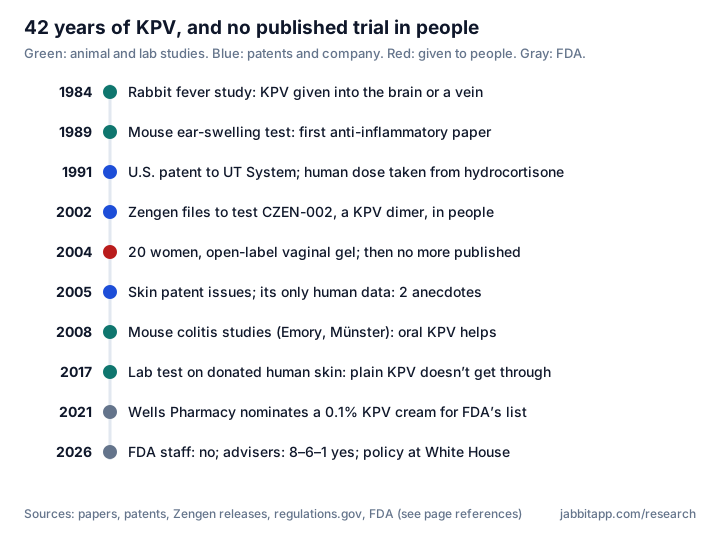
KPV has a better animal record than most peptides on X. Labs in Texas, Italy, Germany, England and Atlanta have reported anti-inflammatory or healing effects in animals and cells, and oral KPV reduced colitis in mice in more than one lab.[7][13][14][17][19][26] But in 42 years, nobody has published a trial that gave KPV to people.[1][23][24] The only human tests we found were company-reported studies of a related two-part molecule used as a vaginal gel, none published in a journal, plus two anecdotes in a patent.[9][10][11] FDA reviewed KPV as a 0.1% skin cream, not the gut capsules people are taking.[1] The doses posted on X are about 100 times below the mouse colitis dose scaled to a person.[15][21][22][25]
Why this matters this week
On October 14, 2026 FDA sent an “Interim Access Policy for Compounding Using Certain Peptides” to the White House for review. Its text isn’t public, and the review hadn’t finished when we checked.[4] KPV is one of six peptides FDA’s compounding advisory committee backed in July, by 8 votes to 6 with 1 abstaining, after FDA’s own reviewers recommended against it.[5][1] On X, a post on October 13 announced “FDA advisers backed its 503A listing!”[25] We counted 172 posts about KPV as a peptide from October 10 to 16. They promise a lot: “will fix 90% of your gut issues,” “what it did to my colitis,” “healed 8 of 8 scraped corneas in 60 hours,” and a new obesity angle. People are swapping doses too: “200-500 mcg daily,” “500mcg of each per day.”[25] So we traced KPV from its first paper to FDA’s review.
What KPV is
KPV is three amino acids, lysine, proline and valine. They are the last three of alpha-MSH, a 13-amino-acid hormone your body makes that tans skin and damps inflammation.[1][8] It is small enough to make cheaply, which is part of why it sells. On its own, KPV doesn’t seem to work the way alpha-MSH does. In FDA’s summary of the research, it failed to displace alpha-MSH from its receptors and didn’t trigger their usual signal.[1] A London team found it still worked in mice whose main melanocortin receptor was broken.[17] FDA’s conclusion is that “the molecular targets underlying the pharmacological effects of KPV-related BDSs remain unknown.”[1]
Where it came from: a fever drug in rabbits
KPV started as a fever reducer. In 1984 James Lipton’s lab at UT Southwestern in Dallas gave it to rabbits with fevers, either into the brain (0.5 to 2 mg) or into a vein (2 to 200 mg). It lowered fever, though less potently than the full hormone.[6][8] In 1989 the same lab showed it reduced ear swelling in mice, its first anti-inflammatory paper.[7]
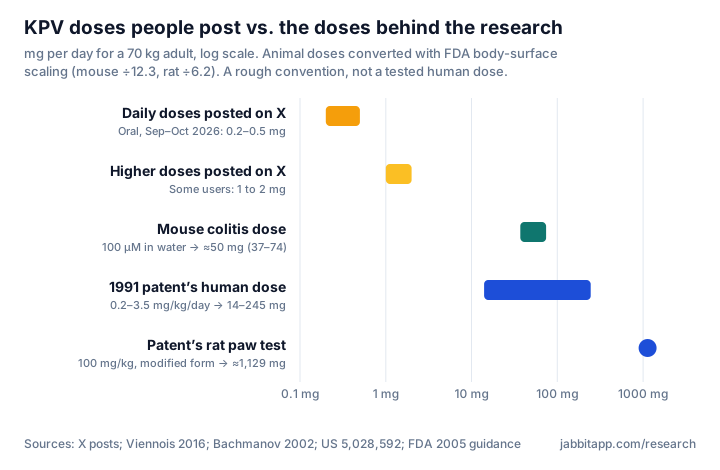
The University of Texas System got a patent on it in 1991.[8] Its anti-inflammatory evidence was a rat paw-swelling test. Six rats got 100 mg/kg of a modified form, with chemical caps on both ends (Ac-KPV-NH2). Six got the same weight of hydrocortisone, a steroid. The two worked about equally well. From that, the patent set human doses by borrowing hydrocortisone’s: about 0.2 to 3 mg/kg a day, and 0.2 to 3.5 mg/kg a day by mouth. It concluded KPV “can be used to reduce inflammation in man, in dosage not markedly different from that of hydrocortisone.”[8] For a 70 kg adult that is 14 to 245 mg a day. No person had taken it. The capped form in the patent is also not the plain KPV sold today, and FDA left capped KPV out of its review.[8][1]
The company that tried people, and stopped
In 1999 a company Lipton ran merged with a drug-delivery firm to form Zengen, in Woodland Hills, California, with Lipton as chief scientific officer.[10] Its lead drug, CZEN-002, was not KPV. It was two KPV-like units joined by a cysteine bridge. Zengen filed to test it in people in October 2002, as a vaginal gel for yeast infections.[10] In May 2004 it announced results: 20 women enrolled and 17 finished. There was no placebo group and no randomization. About 88% tested clear of yeast, with no severe reactions, and the drug wasn’t detectable in blood.[11] Lipton also cited earlier trials in China. Zengen said a larger trial would follow in Europe and Canada.[10][11] We found no results from it, no journal paper on any CZEN-002 trial in people, and a drug database lists the program as discontinued at Phase 2.[12][23][24] In 2003, while the trial was running, Lipton had told a trade paper, “Quite frankly, Zengen is not going to be in a financial position to take that very far.”[10]
Zengen also patented KPV for skin disease in 2005.[9] The patent’s only human evidence is two people. One had psoriasis and rubbed 1 mg of KPV in mineral oil on one forearm and hydrocortisone on the other for 11 days. The patent reports “marked improvement within minutes,” with relief lasting longer on the KPV arm. The other had a rash from a watchband.[9] No controlled study followed. In 2007 the patent was assigned back to Lipton and then to a small company, MSH Pharma. It lapsed in 2017 because nobody paid the maintenance fees.[9]
The gut story: real mouse results
The gut claims rest on solid-looking mouse work. In 2008 a team at Emory showed that KPV is carried into gut lining cells by PepT1, a transporter that normally absorbs small protein fragments from food. In cell tests, tiny amounts of KPV turned down NF-κB, a master switch for inflammation. Added to drinking water, KPV reduced chemically induced colitis in mice.[13] The same year a group in Münster, Germany, found KPV reduced colitis in two mouse models, and every treated mouse with a broken melanocortin receptor survived a colitis challenge.[14] In 2016 the Emory group found that the PepT1 transporter itself promoted colitis-linked tumors in mice, and that KPV in drinking water prevented them, but only in mice that had PepT1.[15] The group later packed KPV into nanoparticles to get more of it to the colon.[16]
This is a real strength. Unlike BPC-157, where about 77% of PubMed papers share one Zagreb co-author, KPV’s anti-inflammatory effect has turned up in independent groups on two continents, and PepT1 gives a plausible way for a swallowed tripeptide to reach gut cells.[7][13][14][17][19] It is still mice. Lab colitis is caused by chemicals or immune transfers, not by the mix of causes behind Crohn’s disease or ulcerative colitis in people.
What we found when we did the math on doses
The mouse colitis studies used 100 micromoles of KPV per liter of drinking water.[15] That’s about 34 mg per liter. Mice drink roughly 6 to 11 mL a day per 30 g of body weight, depending on strain.[21] That works out to about 9 mg/kg a day. FDA’s standard method for converting an animal dose to a human starting dose divides a mouse dose by 12.3.[22] For a 70 kg adult, the mouse colitis dose comes to about 50 mg a day, with a range of 37 to 74 mg depending on how much the mice drank.[15][21][22] The 1991 patent’s oral range is 14 to 245 mg a day.[8] The doses people post on X are 0.2 to 0.5 mg a day, sometimes 1 to 2 mg.[25] That’s 100 to 250 times below the scaled mouse dose.
This is our arithmetic, and it has limits. Body-surface scaling is a convention for picking a safe first dose in a trial, not proof that a dose works. A drug acting inside the gut may depend more on how much reaches the colon than on body weight, and we assumed the mice drank a typical amount. No human study shows what any oral dose of KPV does.[22][1] The point is narrower: the doses on X were never tested, and the mouse results came from far higher ones.
What FDA actually reviewed
KPV reached FDA because Wells Pharmacy Network nominated it in March 2021 for a 0.1% topical cream or gel, for “wound healing and inflammatory conditions” such as psoriasis and eczema.[1][3] Wells withdrew the nomination in April 2026. FDA reviewed KPV anyway, on its own initiative.[3][1] The nomination itself was muddled: its certificate of analysis named one form of KPV in its title and gave the chemical formula of another.[1]
The skin cream has its own problem. In a 2017 lab test, plain KPV applied to donated human skin didn’t get through in any amount the test could detect. It only passed after the skin was punctured with microneedles.[18] FDA cited that study.[1]
Meanwhile FDA found KPV sold online as injections, oral capsules, creams and nasal sprays, and in a “regenerative combo” with BPC-157, TB-500, AOD9604 and follistatin. Claimed uses run from inflammatory bowel disease to mast cell disorders, histamine intolerance, COVID-19 recovery, Lyme disease and mold.[1] Yet FDA-registered outsourcing pharmacies reported making no KPV products at all from January 2017 to June 2025.[1] If a pharmacy listing does come, FDA notes it “may not be limited to a specific use,” so a review of a skin cream could end up covering oral gut capsules.[1]
What’s known in people
Almost nothing. FDA wrote that “No published studies were found in which non-compounded or compounded drug products containing KPV … were used in humans.”[1] Its public list says it found no human exposure data “via any route of administration.”[2] We searched PubMed ourselves and got 140 records on KPV; none is a clinical trial.[23] ClinicalTrials.gov lists no study of KPV, Lys-Pro-Val or CZEN-002.[24] The closest thing to human data is a 1998 test-tube study in which blood drawn from people with HIV made fewer inflammatory signals when KPV was added in the lab.[26]
Checking the claims going around this week
“Healed 8 of 8 scraped corneas in 60 hours.” That’s from a 2006 study in rabbits. Their corneas were scraped and treated with KPV eye drops at 1 to 10 mg/mL, four times a day. At 60 hours, eight of eight treated corneas had healed and none on placebo had.[19] It says nothing about swallowing or injecting KPV.
“KPV for obesity.” The new study behind it, published in 2026 by a team in South Korea, treated mouse fat cells in a dish and gave oral KPV to mice on a fattening diet. The mice gained less weight.[20] No person was involved.
“It fixed my colitis.” One person’s report can’t separate KPV from the other things people take with it, the natural ups and downs of colitis, or placebo. Many of these posts describe KPV taken with BPC-157 or in blends.[25] No trial has tested KPV in colitis in people.[24]
Safety: what isn’t known
FDA found no studies of how KPV is absorbed or cleared in any animal, and no standard toxicity tests: none of a single large dose, repeated dosing, damage to genes, effects on pregnancy or fertility, or cancer.[1] FDA’s adverse-event database had no reports through December 3, 2025.[1] FDA also noted that because plain KPV barely crosses skin, a cream might cause little harm elsewhere in the body; that says nothing about capsules or injections.[1][18] That isn’t reassurance, since almost no one has taken it under medical supervision. FDA also flagged that peptide products can clump into aggregates that may provoke immune reactions, and that there is no information to assess that risk for KPV.[1] KPV has no official quality standard, and there is no FDA-approved product to compare against.[1] Gray-market vials and blends are not checked by anyone.
Bottom line
KPV is one of the better-supported peptides in animals: several independent labs, a plausible route into gut cells, and colitis results in mice from more than one lab.[13][14][15][17] That makes it worth a real trial. It has never had one. Forty-two years after the first rabbit study, the human evidence is an uncontrolled gel study of a different molecule, two anecdotes in a lapsed patent, and a test tube of blood.[11][9][26] FDA reviewed it as a skin cream that plain KPV can’t get through, while people take it by mouth at doses far below what helped mice.[1][18][15][25] If the White House clears FDA’s policy and pharmacies can make KPV, that will settle whether it can be sold. It won’t settle whether it works.
References
- U.S. Food and Drug Administration. Pharmacy Compounding Advisory Committee briefing document: KPV-related bulk drug substances (KPV free base and KPV acetate), for the July 23–24, 2026 meeting. Sections on the nomination (0.1% cream or gel, topical, for wound healing and inflammatory conditions), characterization, historical use (“No published studies were found in which … drug products containing KPV … were used in humans”; outsourcing facilities reported none compounded January 2017 to June 2025), online promotion, pharmacology (“the molecular targets … remain unknown”), absent pharmacokinetic and toxicity studies, FAERS search through December 3, 2025, and FDA’s conclusion (“lack of any human data … via any route of administration, including lack of information to assess immunogenicity or aggregation”). https://www.fda.gov/media/193346/download. Checked October 17, 2026.
- U.S. Food and Drug Administration. Certain Bulk Drug Substances for Use in Compounding that May Present Significant Safety Risks (Category 2). Content current as of April 22, 2026. KPV appears in the table of substances nominated but withdrawn: “FDA has not identified any human exposure data on drug products containing KPV administered via any route of administration.” https://www.fda.gov/drugs/human-drug-compounding/certain-bulk-drug-substances-use-compounding-may-present-significant-safety-risks. Checked October 17, 2026.
- Regulations.gov, docket FDA-2015-N-3534: Wells Pharmacy Network nomination including KPV, document FDA-2015-N-3534-0294 (received March 25, 2021; posted April 1, 2021) https://www.regulations.gov/document/FDA-2015-N-3534-0294; withdrawal, document FDA-2015-N-3534-0484 (April 14, 2026) https://www.regulations.gov/document/FDA-2015-N-3534-0484. Checked October 17, 2026.
- Office of Information and Regulatory Affairs (OMB). Pending EO 12866 Regulatory Review: Interim Access Policy for Compounding Using Certain Peptides, RIN 0910-ZD94, received 10/14/2026; no conclusion listed when checked. https://www.reginfo.gov/public/do/eoDetails?rrid=1568964. Checked October 17, 2026.
- Vote tallies from the July 2026 Pharmacy Compounding Advisory Committee meeting (KPV 8 yes, 6 no, 1 abstain): Holland & Knight, Peptides at a Crossroads, October 2026 https://www.hklaw.com/en/insights/publications/2026/10/peptides-at-a-crossroads-what-wellness-providers-need-to-know; MDside, The FDA advisory vote on six peptides, October 9, 2026 https://www.mdside.com/peptide-advisory-vote-what-happens-next/. Checked October 17, 2026.
- Richards DB, Lipton JM. Effect of alpha-MSH 11-13 (lysine-proline-valine) on fever in the rabbit. Peptides. 1984;5(4):815-817. doi:10.1016/0196-9781(84)90027-5. PMID 6333677. https://pubmed.ncbi.nlm.nih.gov/6333677/. Checked October 17, 2026.
- Hiltz ME, Lipton JM. Antiinflammatory activity of a COOH-terminal fragment of the neuropeptide alpha-MSH. FASEB J. 1989;3(11):2282-2284. PMID 2550304. https://pubmed.ncbi.nlm.nih.gov/2550304/. Checked October 17, 2026.
- US Patent 5,028,592, “Antipyretic and anti-inflammatory peptides,” inventor James M. Lipton, assigned to the Board of Regents, University of Texas System; filed August 5, 1988, continuing a 1984 application; granted July 2, 1991; expired. Rabbit fever tests (0.5 to 2 mg into the brain, 2 to 200 mg intravenously). Rat paw test: 24 rats, 6 given 100 mg/kg of the modified form Ac-Lys-Pro-Val-NH2 and 6 given 100 mg/kg hydrocortisone by abdominal injection, with matched controls. Dose ranges of about 0.2 to 3 mg/kg/day “derived from the aforementioned observation of approximately equipotentcy [sic] of the tripeptide and hydrocortisone, and the general knowledge in the art regarding effective dose ranges of hydrocortisone”; oral use “at somewhat higher doses,” about 0.2 to 3.5 mg/kg/day (claim 6); KPV “can be used to reduce inflammation in man, in dosage not markedly different from that of hydrocortisone.” https://patents.google.com/patent/US5028592A/en. Checked October 17, 2026.
- US Patent 6,894,028 B2, “Use of KPV tripeptide for dermatological disorders,” inventors James M. Lipton and Anna Catania; filed April 6, 2001 by Zengen, Inc.; granted May 17, 2005. Human examples: one psoriasis subject, 1 mg KPV in mineral oil twice daily on one forearm and hydrocortisone on the other for 11 days; one contact-dermatitis subject. Claim 1 covers KPV combined with a glucocorticoid. Legal events: reassigned from Zengen to Lipton (effective August 30, 2007), to MSH Pharma (October 14, 2007), merged into MSH BioPharma, Inc. (2013); expired May 17, 2017 for failure to pay maintenance fees. https://patents.google.com/patent/US6894028B2/en. Checked October 17, 2026.
- Lorenzo A. Zengen developing its peptides to fight inflammation, infection. BioWorld Today, March 21, 2003 (IND for CZEN 002 filed in October 2002; 20-patient Phase I/II trial of an intravaginal gel for yeast infection at three U.S. sites; CSO James Lipton: “Zengen is not going to be in a financial position to take that very far”; revenue from over-the-counter products containing “a tri-peptide called CZEN 001”). https://www.bioworld.com/articles/471031. Checked October 17, 2026.
- Zengen, Inc. press release via EurekAlert!, May 25, 2004: Phase I/II results for CZEN-002 in vulvovaginal candidiasis (open-label, non-randomized; 20 enrolled, 17 completed; 88.2% negative by KOH test and 87.5% by culture; no severe adverse reactions; plasma levels undetectable or below the limit of quantitation; Lipton cited earlier trials “completed in China”; Phase IIb planned in Europe and Canada). https://www.eurekalert.org/news-releases/796451. Checked October 17, 2026.
- Patsnap Synapse, Zengen, Inc. organization page (lists CZEN-002 as discontinued at Phase 2). https://synapse.patsnap.com/organization/c617019d13f1bbeb79b89a2146122db0. Checked October 17, 2026.
- Dalmasso G, Charrier-Hisamuddin L, Nguyen HT, et al. PepT1-mediated tripeptide KPV uptake reduces intestinal inflammation. Gastroenterology. 2008;134(1):166-178. doi:10.1053/j.gastro.2007.10.026. PMID 18061177 (KPV “added to drinking water” in DSS and TNBS colitis). https://pubmed.ncbi.nlm.nih.gov/18061177/. Checked October 17, 2026.
- Kannengiesser K, Maaser C, Heidemann J, et al. Melanocortin-derived tripeptide KPV has anti-inflammatory potential in murine models of inflammatory bowel disease. Inflamm Bowel Dis. 2008;14(3):324-331. doi:10.1002/ibd.20334. PMID 18092346. https://pubmed.ncbi.nlm.nih.gov/18092346/. Checked October 17, 2026.
- Viennois E, Ingersoll SA, Ayyadurai S, et al. Critical role of PepT1 in promoting colitis-associated cancer and therapeutic benefits of the anti-inflammatory PepT1-mediated tripeptide KPV in a murine model. Cell Mol Gastroenterol Hepatol. 2016;2(3):340-357. doi:10.1016/j.jcmgh.2016.01.006. PMID 27458604; full text PMC4957955 (“100 μmol/L KPV in their drinking water”). https://pubmed.ncbi.nlm.nih.gov/27458604/. Checked October 17, 2026.
- Xiao B, Xu Z, Viennois E, et al. Orally targeted delivery of tripeptide KPV via hyaluronic acid-functionalized nanoparticles efficiently alleviates ulcerative colitis. Mol Ther. 2017;25(7):1628-1640. doi:10.1016/j.ymthe.2016.11.020. PMID 28143741. https://pubmed.ncbi.nlm.nih.gov/28143741/. Checked October 17, 2026.
- Getting SJ, Schiöth HB, Perretti M. Dissection of the anti-inflammatory effect of the core and C-terminal (KPV) alpha-melanocyte-stimulating hormone peptides. J Pharmacol Exp Ther. 2003;306(2):631-637. doi:10.1124/jpet.103.051623. PMID 12750433. https://pubmed.ncbi.nlm.nih.gov/12750433/. Checked October 17, 2026.
- Pawar K, Kolli CS, Rangari VK, et al. Transdermal iontophoretic delivery of lysine-proline-valine (KPV) peptide across microporated human skin. J Pharm Sci. 2017;106(7):1814-1820. doi:10.1016/j.xphs.2017.03.017. PMID 28343991 (passive permeation below the detection limit of 0.01 μg/mL; 4.4 μg/cm²/h after microneedle treatment). https://pubmed.ncbi.nlm.nih.gov/28343991/. Checked October 17, 2026.
- Bonfiglio V, Camillieri G, Avitabile T, et al. Effects of the COOH-terminal tripeptide alpha-MSH(11-13) on corneal epithelial wound healing: role of nitric oxide. Exp Eye Res. 2006;83(6):1366-1372. doi:10.1016/j.exer.2006.07.014. PMID 16965771 (rabbits; KPV eye drops at 1, 5 or 10 mg/mL; “eight out of eight (100%) corneas … completely re-epithelized” at 60 hours versus none on placebo). https://pubmed.ncbi.nlm.nih.gov/16965771/. Checked October 17, 2026.
- An SH, Park JY, Lee SJ. KPV attenuates adipogenesis and lipid metabolism through modulation of ROS-mediated AKT/mTORC1/PPARγ signaling. Tissue Cell. 2026;104(Pt 1):103837. doi:10.1016/j.tice.2026.103837. PMID 42585803 (3T3-L1 mouse fat cells; oral KPV in high-fat-diet mice). https://pubmed.ncbi.nlm.nih.gov/42585803/. Checked October 17, 2026.
- Bachmanov AA, Reed DR, Beauchamp GK, Tordoff MG. Food intake, water intake, and drinking spout side preference of 28 mouse strains. Behav Genet. 2002;32(6):435-443. PMC1397713 (water intake across strains about 5.7 to 11.4 mL per 30 g of body weight a day, average 7.7). https://pmc.ncbi.nlm.nih.gov/articles/PMC1397713/. Checked October 17, 2026.
- U.S. Food and Drug Administration. Guidance for Industry: Estimating the Maximum Safe Starting Dose in Initial Clinical Trials for Therapeutics in Adult Healthy Volunteers. July 2005 (Table 1: divide a mouse mg/kg dose by 12.3 and a rat dose by 6.2 for a human-equivalent dose). https://www.fda.gov/media/72309/download. Checked October 17, 2026.
- Jabbit search of PubMed, October 17, 2026, via NCBI E-utilities, for KPV in titles or abstracts alongside peptide, melanocortin, α-MSH, inflammation or colitis terms, or Lys-Pro-Val, lysine-proline-valine, MSH(11-13) or CKPV: 140 records, none with a clinical-trial publication type. Query and record list: https://jabbitapp.com/research/sources/kpv-pubmed-2026-10-17.json.
- ClinicalTrials.gov intervention searches, October 17, 2026, for KPV, “Lys-Pro-Val,” “lysine-proline-valine,” CZEN and “alpha-MSH 11-13”: 0 studies each. https://clinicaltrials.gov/search?intr=KPV. Checked October 17, 2026.
- X posts and counts, pulled by Jabbit on October 17, 2026. Recent-search count for KPV with peptide, gut, colitis, inflammation, mcg or stack, excluding reposts, UTC days October 10–16: 15, 21, 23, 29, 22, 29 and 33 posts (172 in all). Posts: @vedichi_, October 15, “healed 8 of 8 scraped corneas in 60 hours” https://x.com/vedichi_/status/2110737876526805028; @pioneerRyd, October 12, “what it did to my colitis” https://x.com/pioneerRyd/status/2109665396936577481; @RegenRandy, October 12, on KPV and obesity https://x.com/RegenRandy/status/2109477619033137618; @biohackerziv, September 24, “Oral Peptide KPV + BPC 157 will fix 90% of your gut issues” https://x.com/biohackerziv/status/2102977264204013589; @regenhealthapp, October 6, “200-500 mcg daily” https://x.com/regenhealthapp/status/2107526408654192865; @couchsecurity, October 2, “500mcg of each per day” https://x.com/couchsecurity/status/2106036904130998301; @TextrahedronIX, September 18, raising to 1–2 mg https://x.com/TextrahedronIX/status/2100990401620344962; @huem4ncom, October 13, “FDA advisers backed its 503A listing!” https://x.com/huem4ncom/status/2109832454097834424; @vedichi_, October 9, the KLOW blend, “KPV, the brake” https://x.com/vedichi_/status/2108353950407622945.
- Catania A, Garofalo L, Cutuli M, et al. Melanocortin peptides inhibit production of proinflammatory cytokines in blood of HIV-infected patients. Peptides. 1998;19(6):1099-1104. doi:10.1016/s0196-9781(98)00055-2. PMID 9700761 (blood samples treated in the lab). https://pubmed.ncbi.nlm.nih.gov/9700761/. Checked October 17, 2026.
This page analyzes regulatory documents, patents, company records, trial registries and published research. It is not medical advice and does not recommend using, sourcing, or dosing KPV. The PubMed count, dose scaling and X counts are Jabbit’s own; inputs are cited above.